Exceptional Works: Ruth Asawa
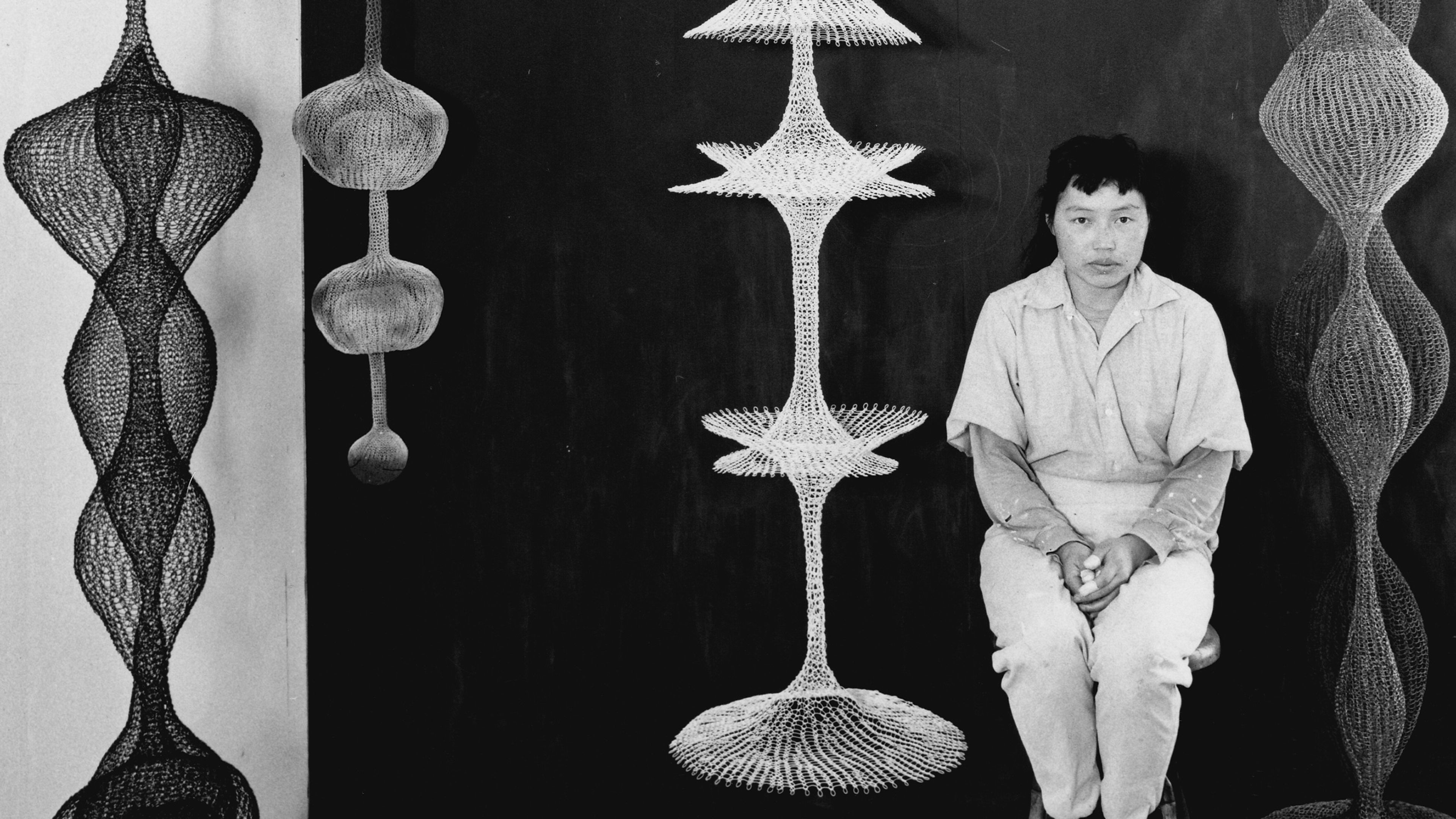
Ruth Asawa in her studio, mid-1950s (detail). Photo by Paul Hassel; the sculpture to the artist’s right is Untitled (S.335, Hanging Four-and-a-Half Open Hyperbolic Shapes that Penetrate Each Other), c. 1954, now in the collection of Glenstone, Potomac, Maryland
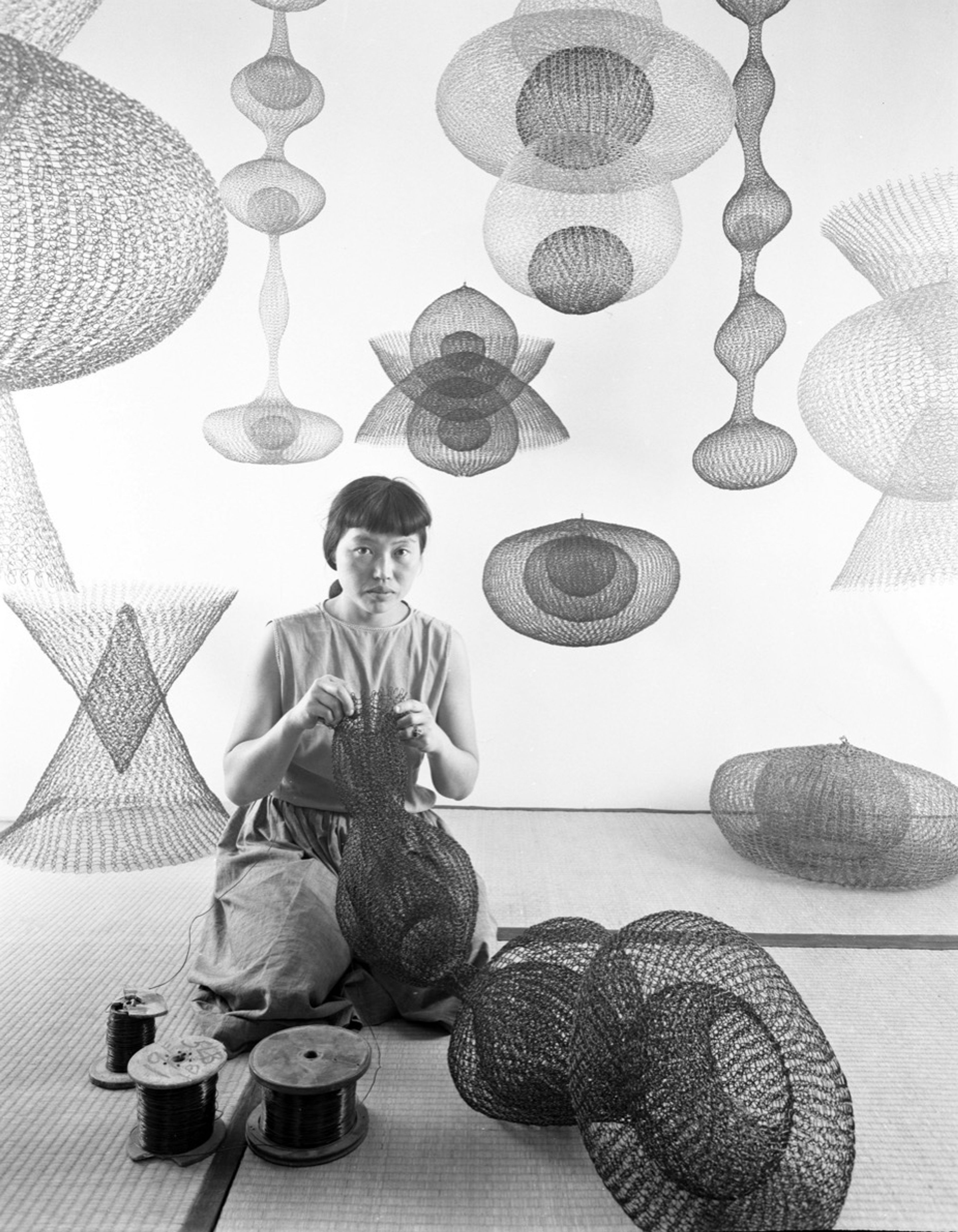
Ruth Asawa, 1954. Nat Farbman/Time & Life Pictures, via Getty Images
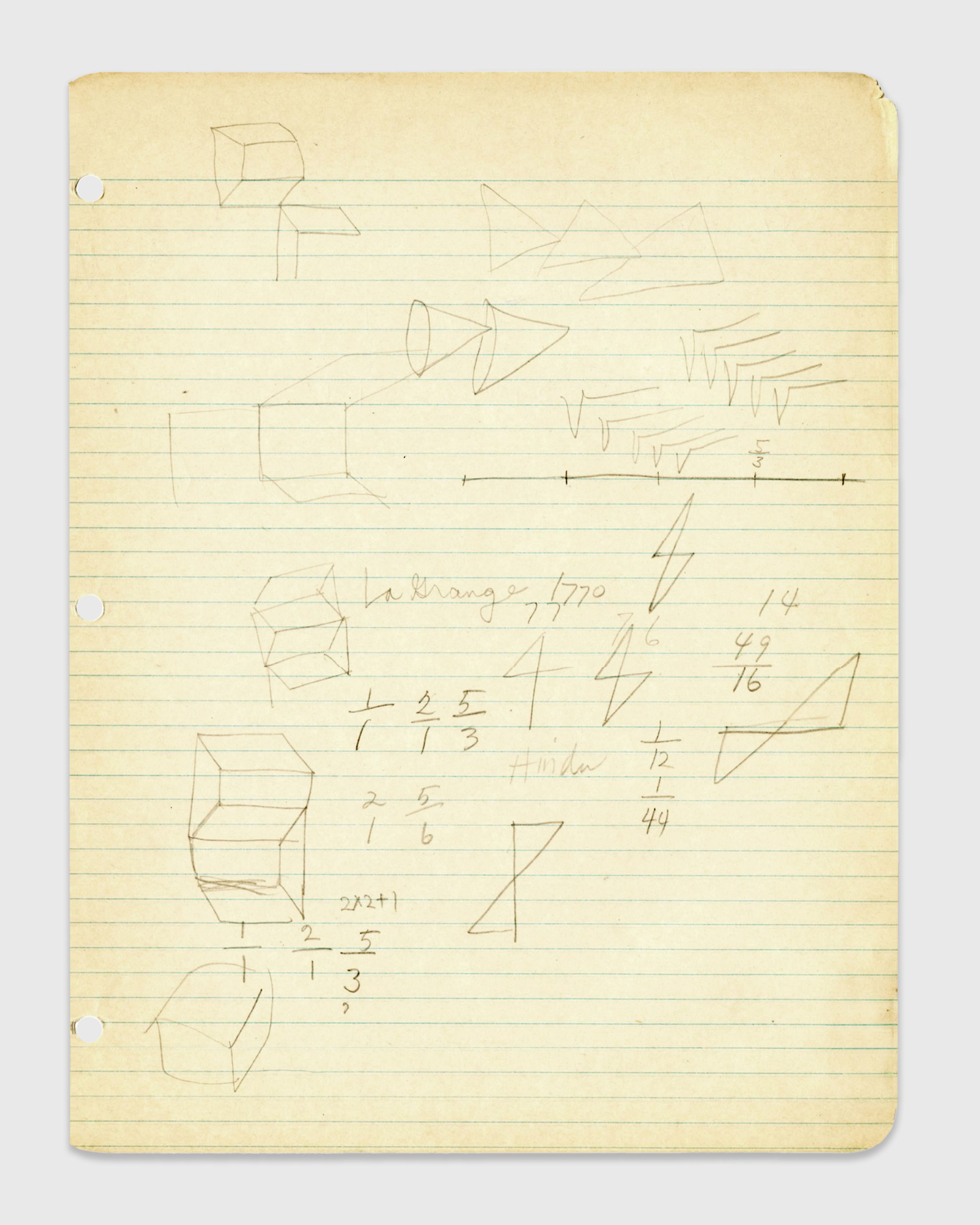
A page from Ruth Asawa’s class notebook while a student of Max Dehn at Black Mountain College, c. 1947–1948. © 2026 Ruth Asawa Lanier, Inc.
Asawa began working with wire in the late 1940s as a student at Black Mountain College in North Carolina, where her teachers included Josef Albers, Merce Cunningham, Buckminster Fuller, and the mathematician Max Dehn. “I consider Ruth Asawa to be the most gifted, productive, and originally inspired artist that I have ever known personally,” Fuller later said.
The school’s multidisciplinary curriculum included science and mathematics as well as arts subjects. Asawa spent three years at Black Mountain, absorbing the experimental teaching techniques and manual, holistic approach that would deeply inform her work.
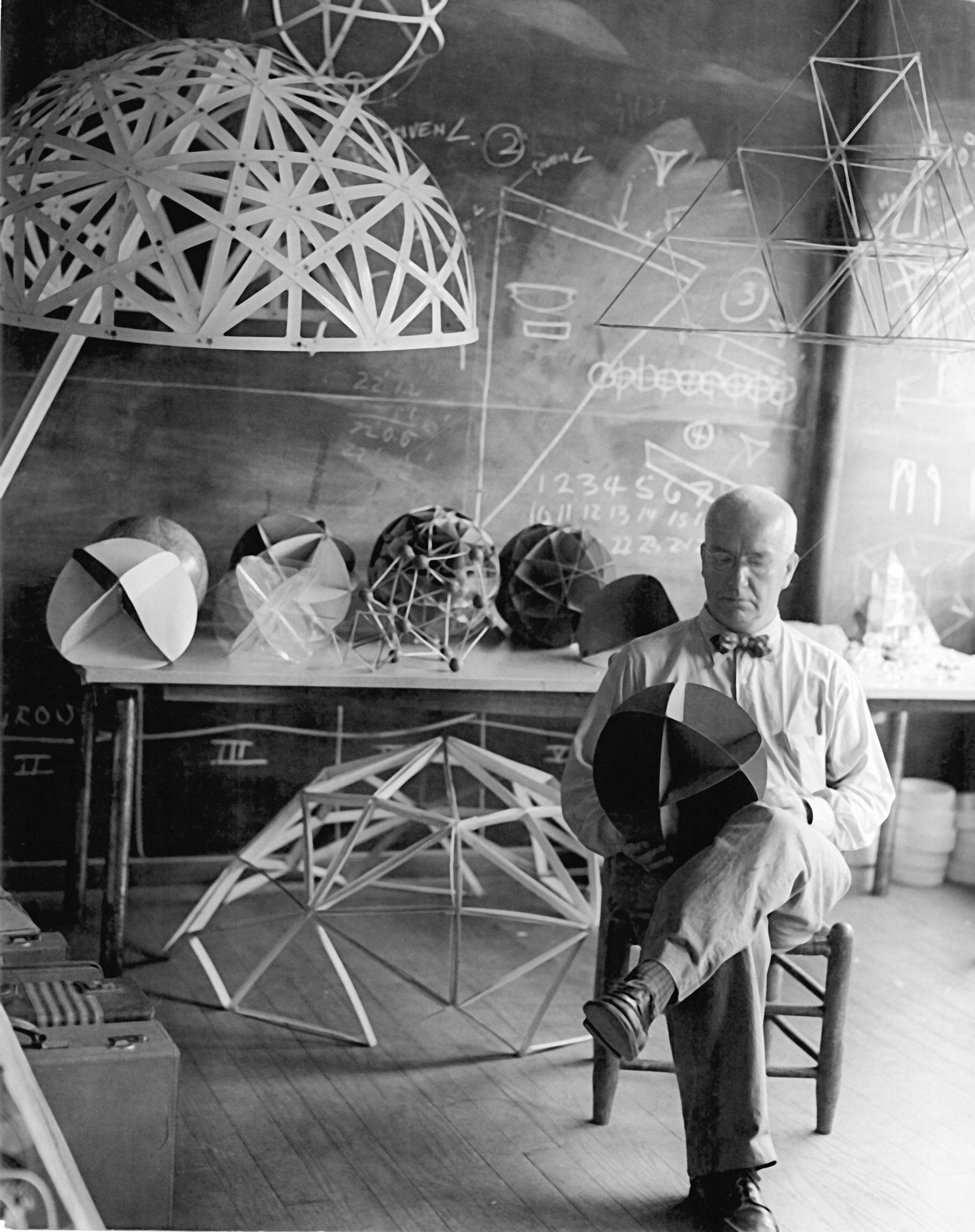
Buckminster Fuller at Black Mountain College, c. 1948–1949. Photo by Hazel Larsen Archer
Many of the motifs and forms that interested Asawa from her studies at Black Mountain College presage her later work. The dance classes she took in her final year, taught by legendary choreographer Merce Cunningham, anticipate her deep interest in movement and perception, as reflected in her transparent, suspended sculptures. Asawa also took Josef Albers’s famous Basic Design class; these included a drawing exercise based on the Greek meander, a single repeated interlocking line resembling a key motif, which students explored through varying scales and shapes. Asawa’s notes from the mathematics classes taught by Max Dehn also show how her learnings were to inform her later sculptural work with form and pattern. Fuller, who was to prove a highly influential presence for Asawa, advocated for the invention of structures by learning from nature.
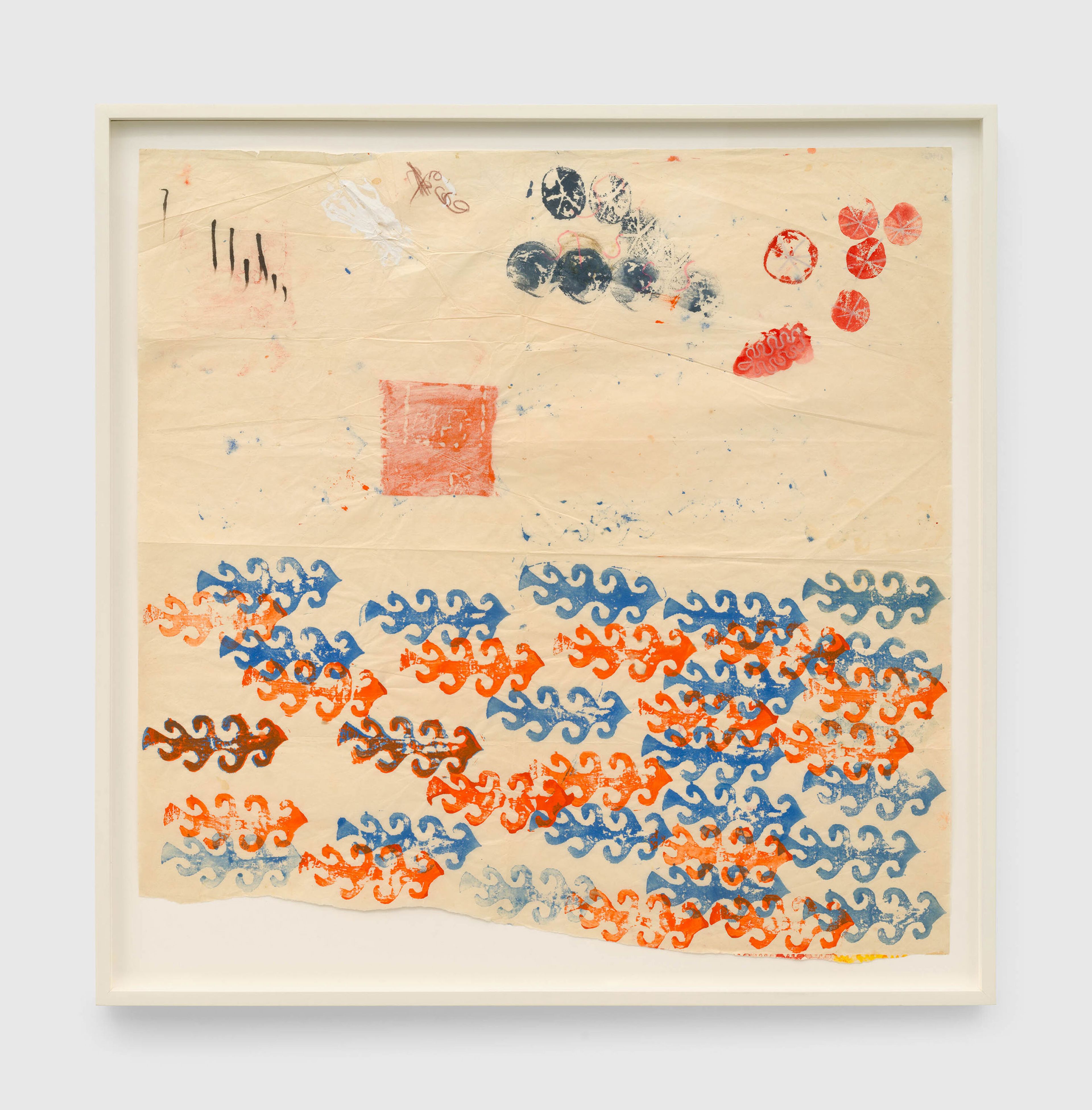
Ruth Asawa, Untitled (SF.044b, Potato Print - Meander, Blue/Orange), c. 1950–1959
Asawa began working with wire in the late 1940s, having learnt a looping technique from local artisans on a trip to Toluca, Mexico in 1947 as a volunteer for the American Friends Service Committee. She executed her looped-wire sculptures in increasingly intricate, interwoven configurations.
As curator Tamara H. Schenkenberg describes:
"By the early to mid 1950s, Asawa’s commitment to manual engagement with the material, coupled with her interest in solving an ever-increasing and cumulative set of formal problems posed by her constructions in wire, led her to a series of elaborate permutations.... [These included] an increasing number of lobed forms that redirected the sculpture vertically, adding the element of height to the experience of the work. Asawa also started to experiment with different types of wire, which led to often striking variations in color. These complex constructions also started to feature a greater number of interlocking parts that move from the interior out to the exterior of the sculpture (and back again), resulting in intricately overlapping layers that dazzle the eye, but also create a sense of intrigue."
Ruth Asawa, Untitled (S.040, Hanging Eight-and-a-Half Open Hyperbolic Shapes that Penetrate Each Other), c. 1956 (detail)
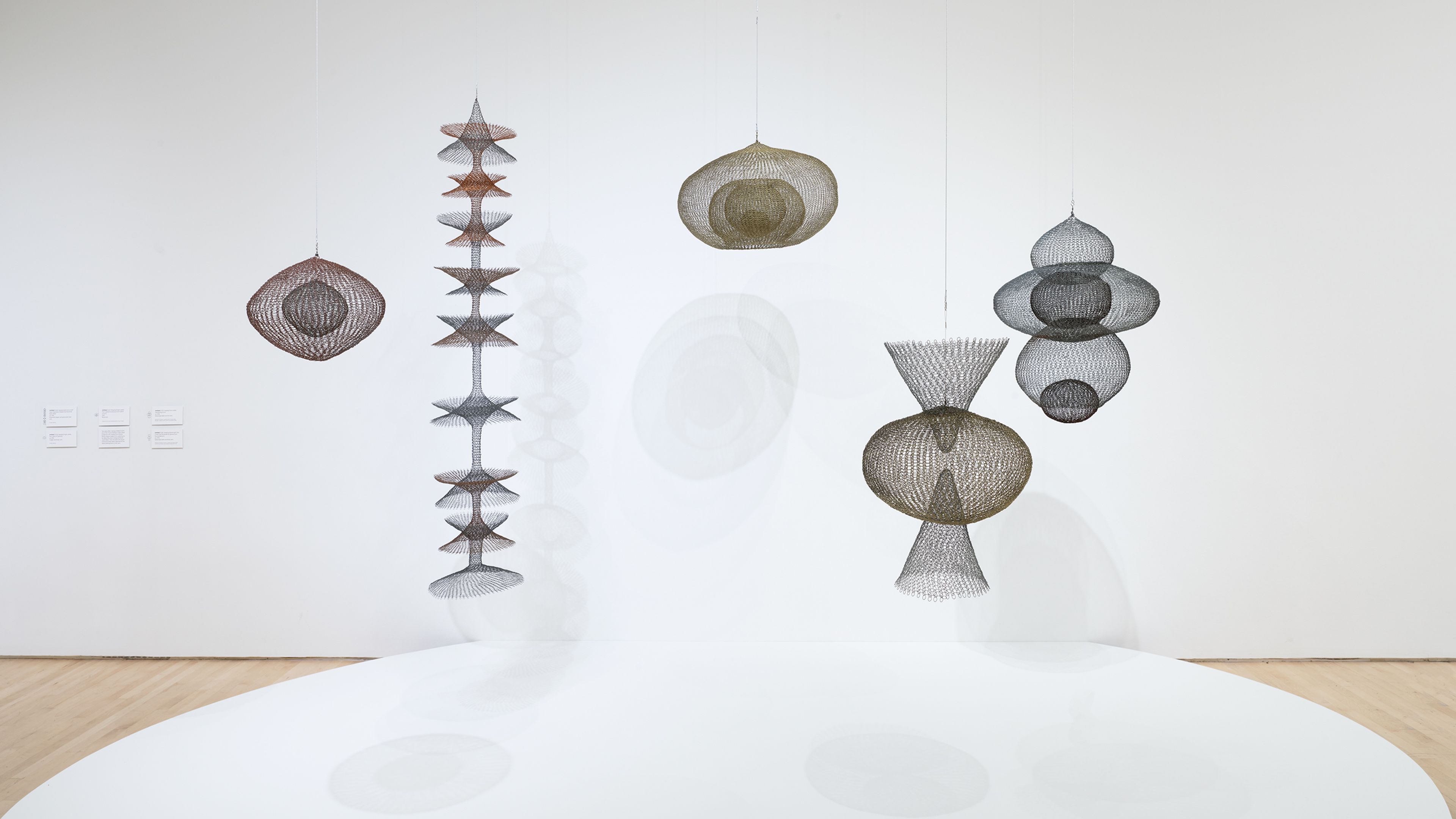
Installation view, Ruth Asawa: Retrospective, San Francisco Museum of Modern Art, 2025. Photo by Don Ross, courtesy SFMOMA
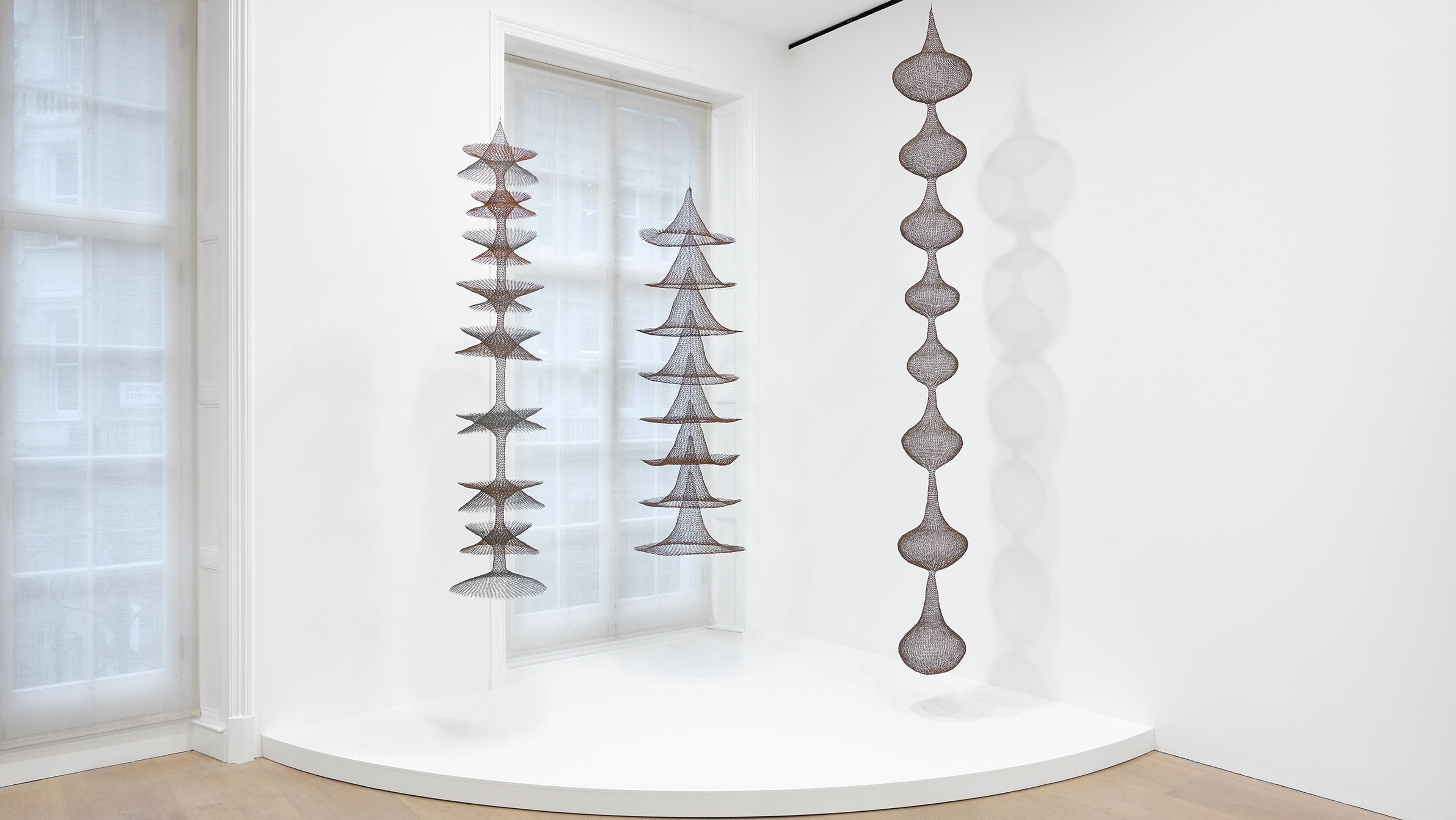
Installation view, Ruth Asawa: A Line Can Go Anywhere, David Zwirner, London, 2020
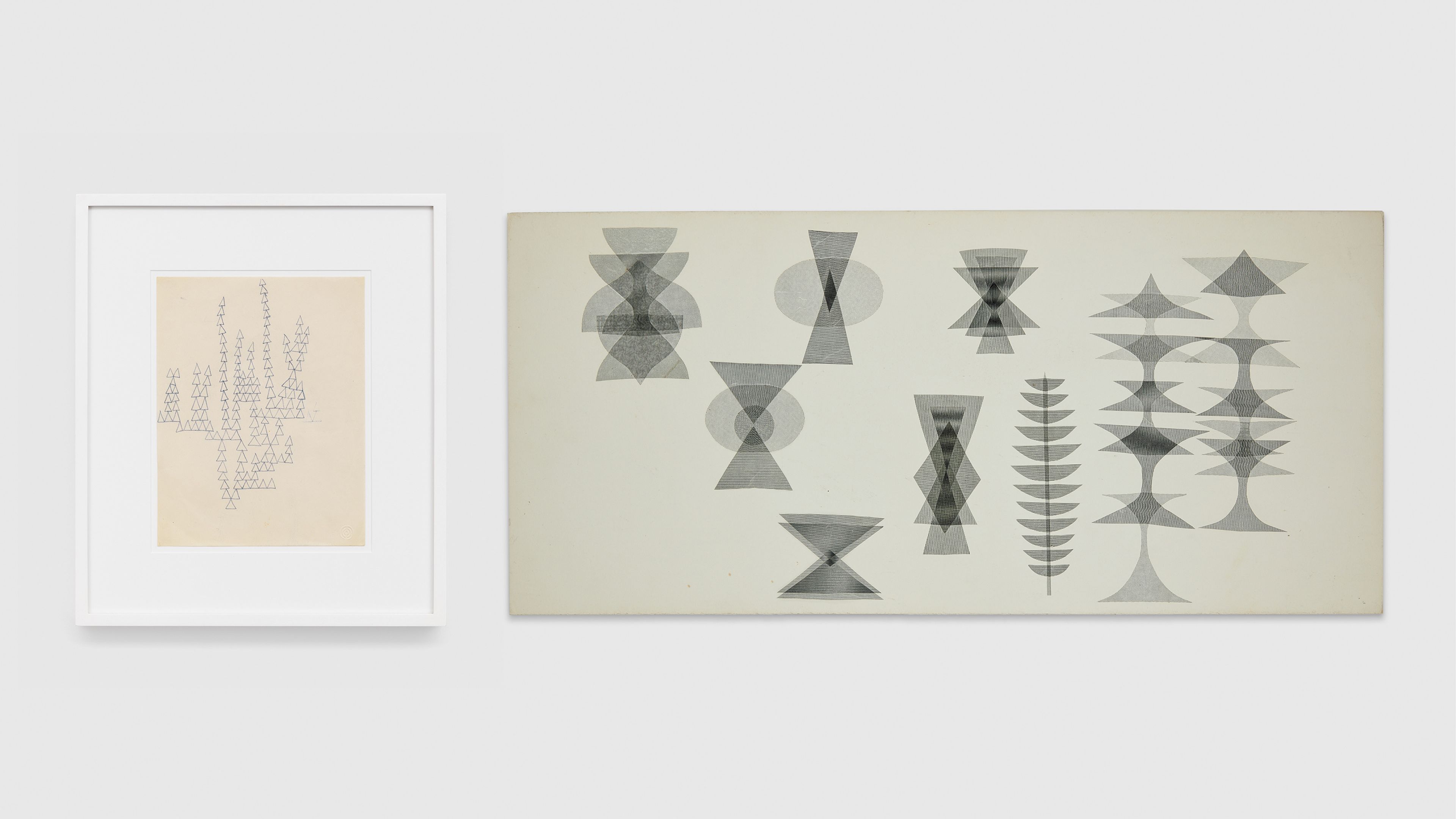
Ruth Asawa, Untitled (SF.028a, Triangle Study), c. 1951–1952 (left); Untitled (ZP.17F, Nine Looped-Wire Sculptural Forms), c. 1955–1959 (right)
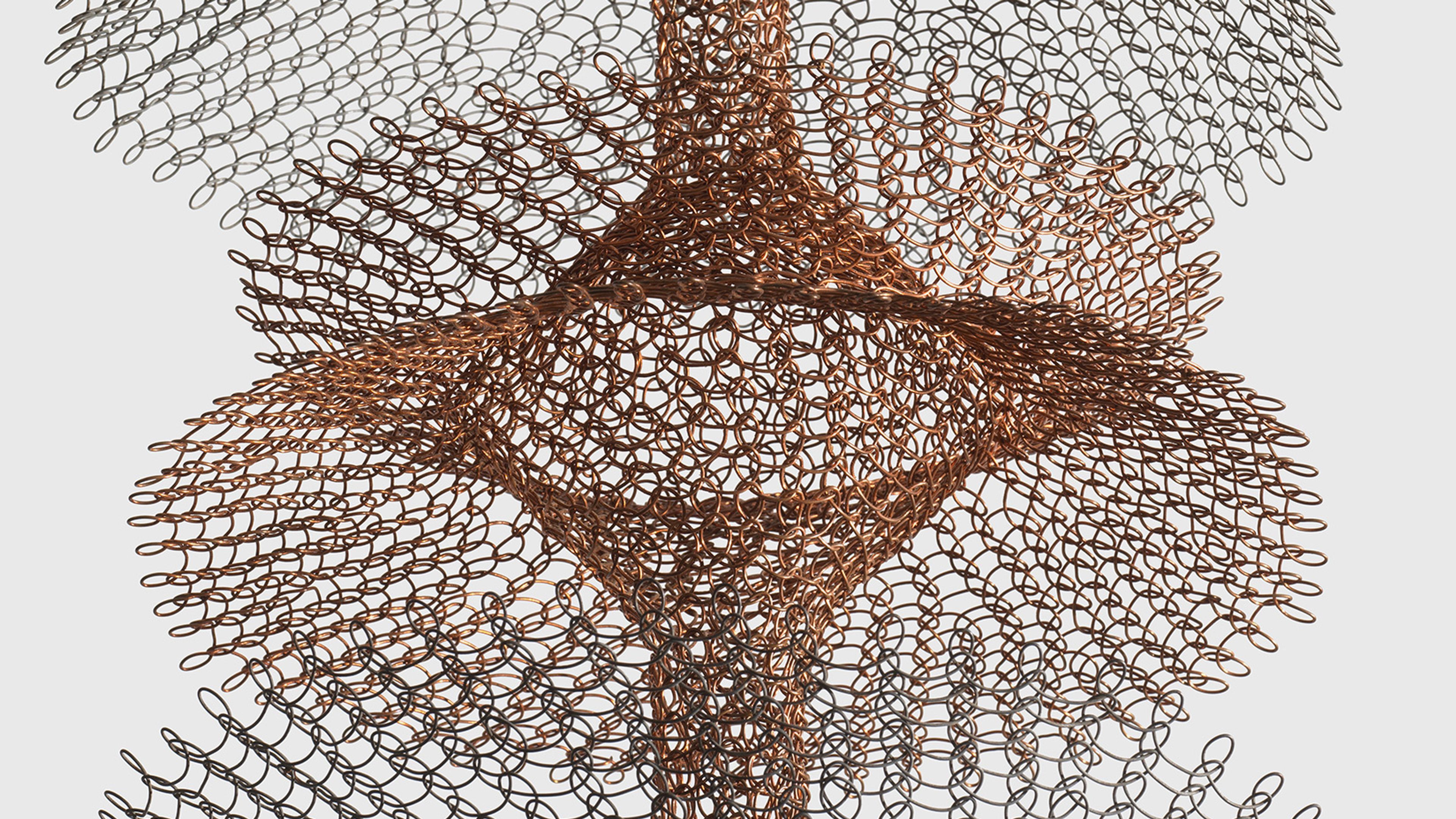
Ruth Asawa, Untitled (S.040, Hanging Eight-and-a-Half Open Hyperbolic Shapes that Penetrate Each Other), c. 1956 (detail)
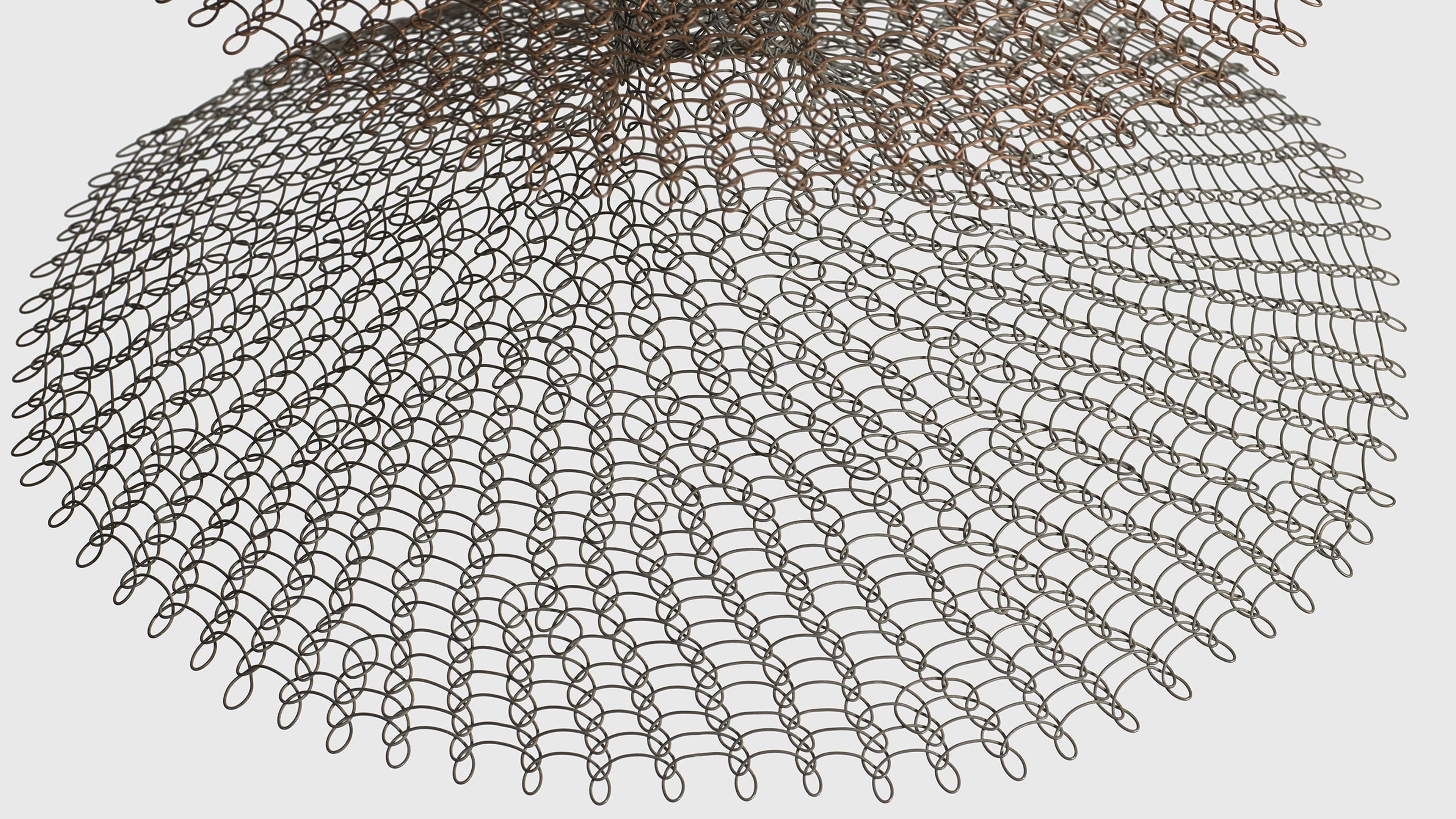
Ruth Asawa, Untitled (S.040, Hanging Eight-and-a-Half Open Hyperbolic Shapes that Penetrate Each Other), c. 1956 (detail)
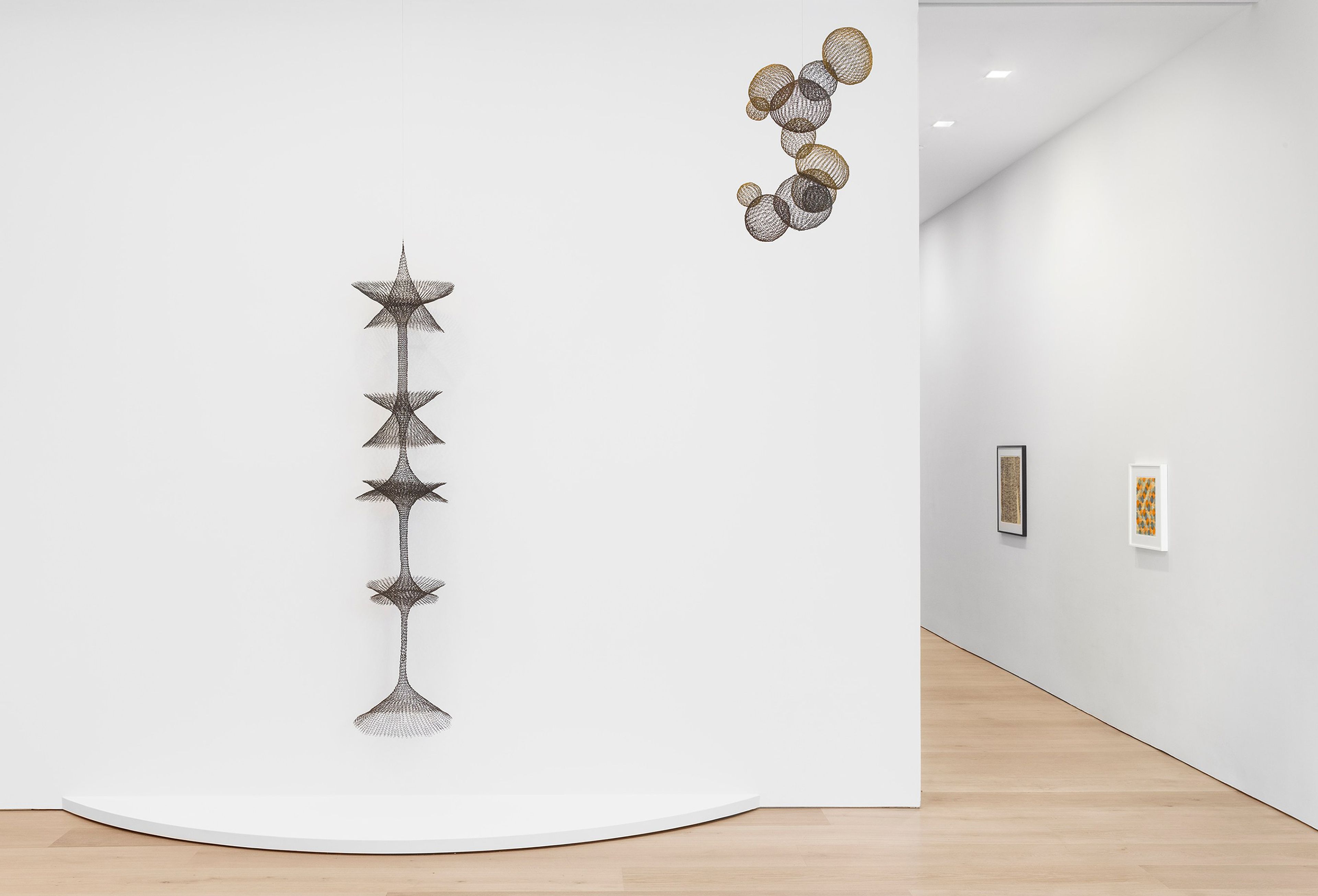
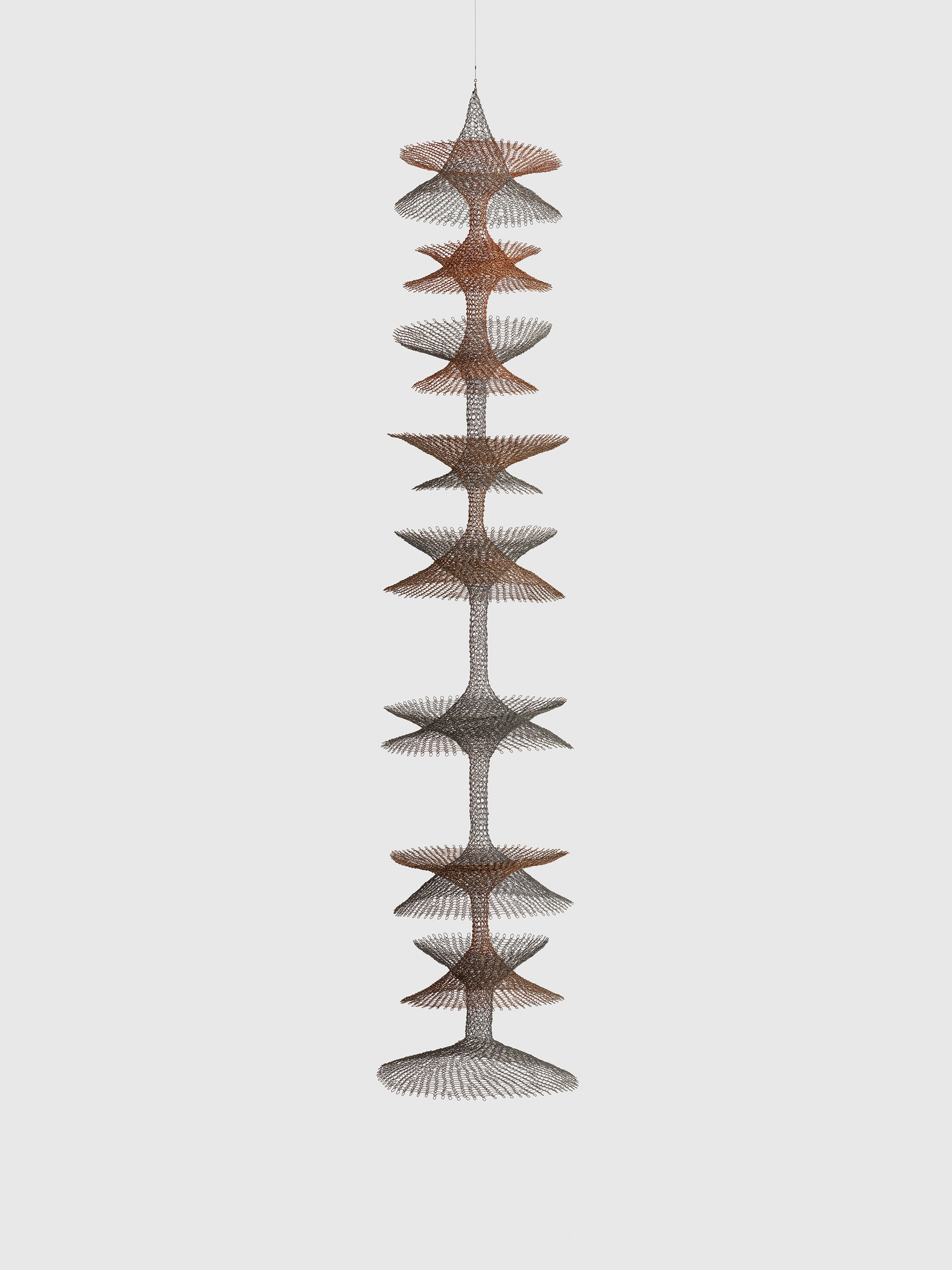
Ruth Asawa, Untitled (S.335, Hanging Four-and-a-Half Open Hyperbolic Shapes that Penetrate Each Other), c. 1954. Glenstone, Potomac, Maryland. Installation view, Ruth Asawa: A Line Can Go Anywhere, David Zwirner, London, 2020
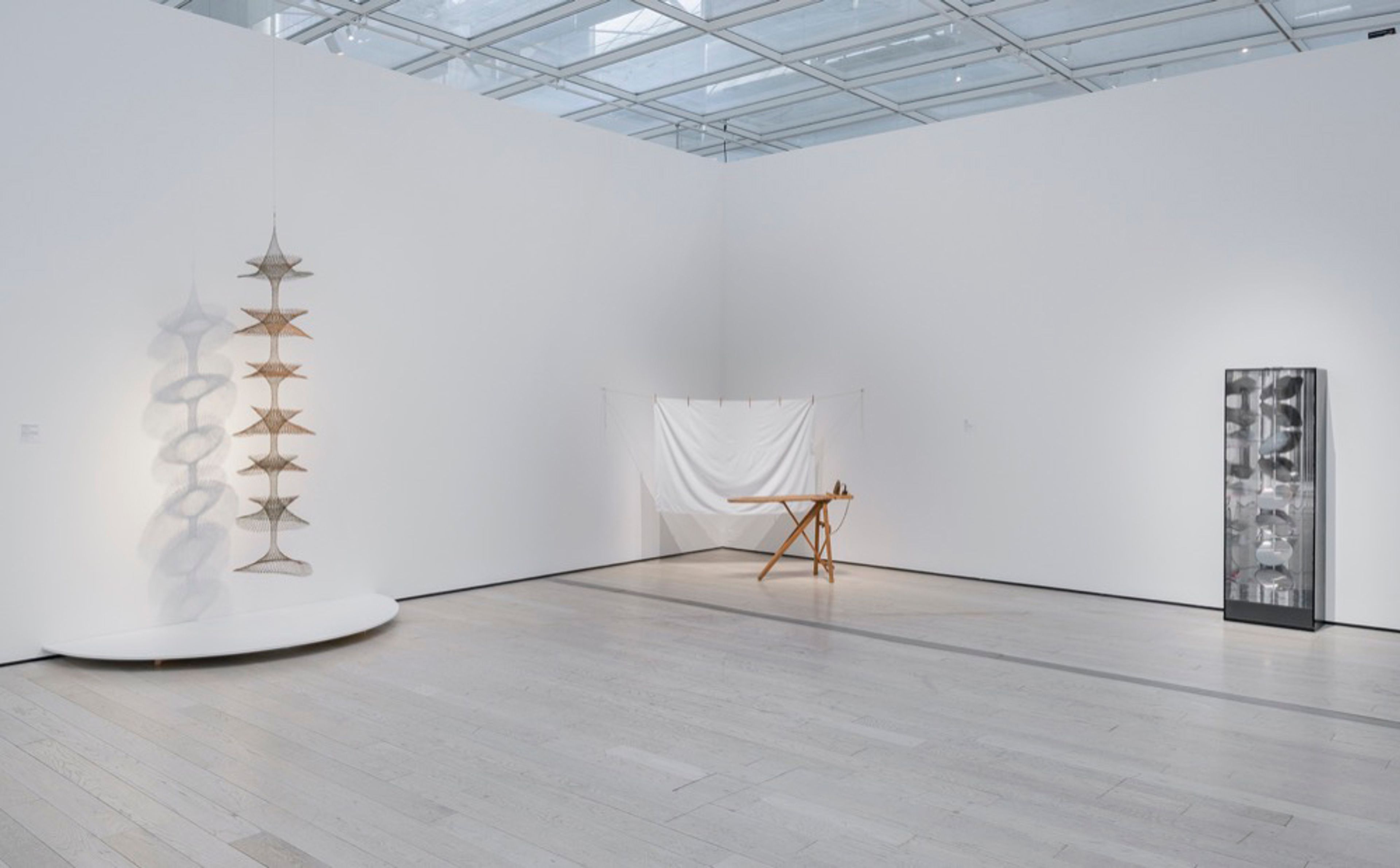
Ruth Asawa, Untitled (S.027, Hanging, Six-and-a-Half Open Hyperbolic Shapes that Penetrate Each Other), 1954. Los Angeles County Museum of Art. Installation view, 50 Works 50 Weeks, Los Angeles County Museum of Art, 2025
Similar works are held in important collections including Glenstone, Potomac, Maryland; Los Angeles County Museum of Art; and de Young Museum, Fine Arts Museums of San Francisco.
Asawa’s first posthumous museum retrospective, a collaboration between San Francisco Museum of Modern Art and The Museum of Modern Art, New York, is a comprehensive survey of her groundbreaking career. Having been presented in San Francisco and New York last year, the exhibition opens at the Guggenheim Museum Bilbao on March 19.
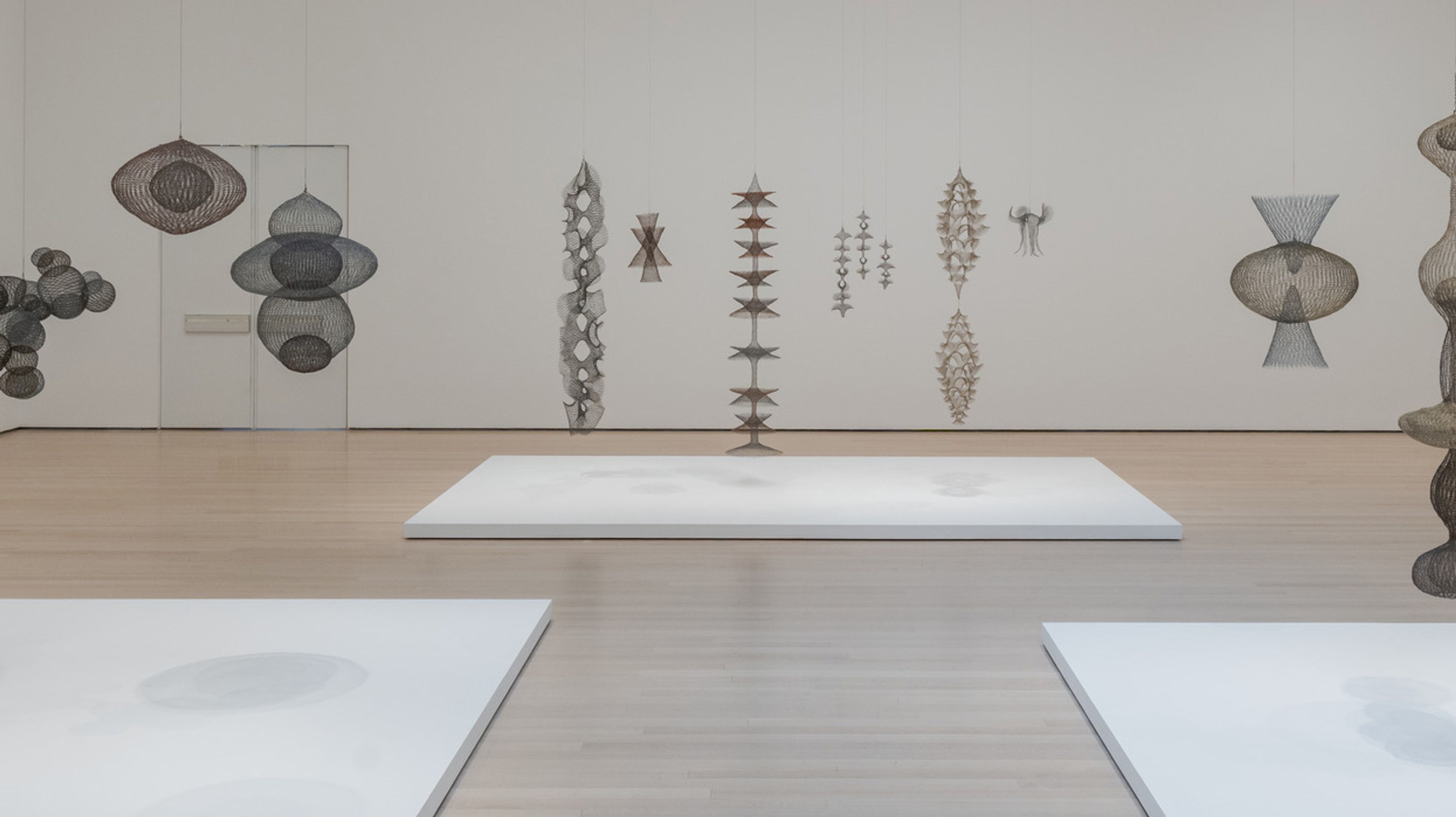
Installation view, Ruth Asawa: A Retrospective, Museum of Modern Art, New York, 2025–2026. Photo by Jonathan Dorado. Digital Image © 2025 The Museum of Modern Art, New York
“[Asawa’s] sinuous sculptures, suspended from the ceiling of some of the dozen galleries ... surprise, mesmerize, and delight with [their] transparency, fluidity, complexity, and elegance.”
—Carol Canter, Medium, 2025
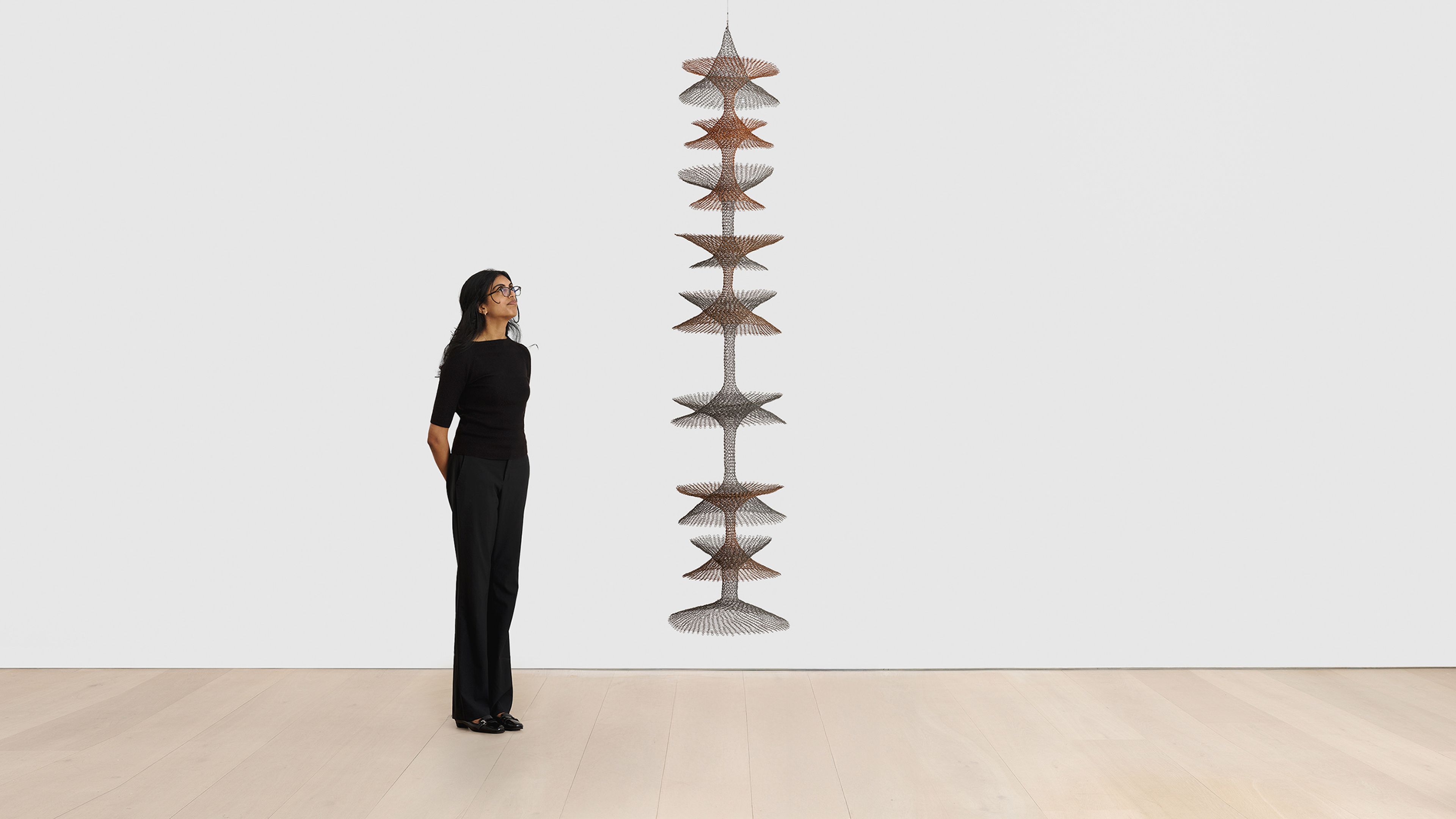
Installation view, Ruth Asawa, Untitled (S.040, Hanging Eight-and-a-Half Open Hyperbolic Shapes that Penetrate Each Other), c. 1956
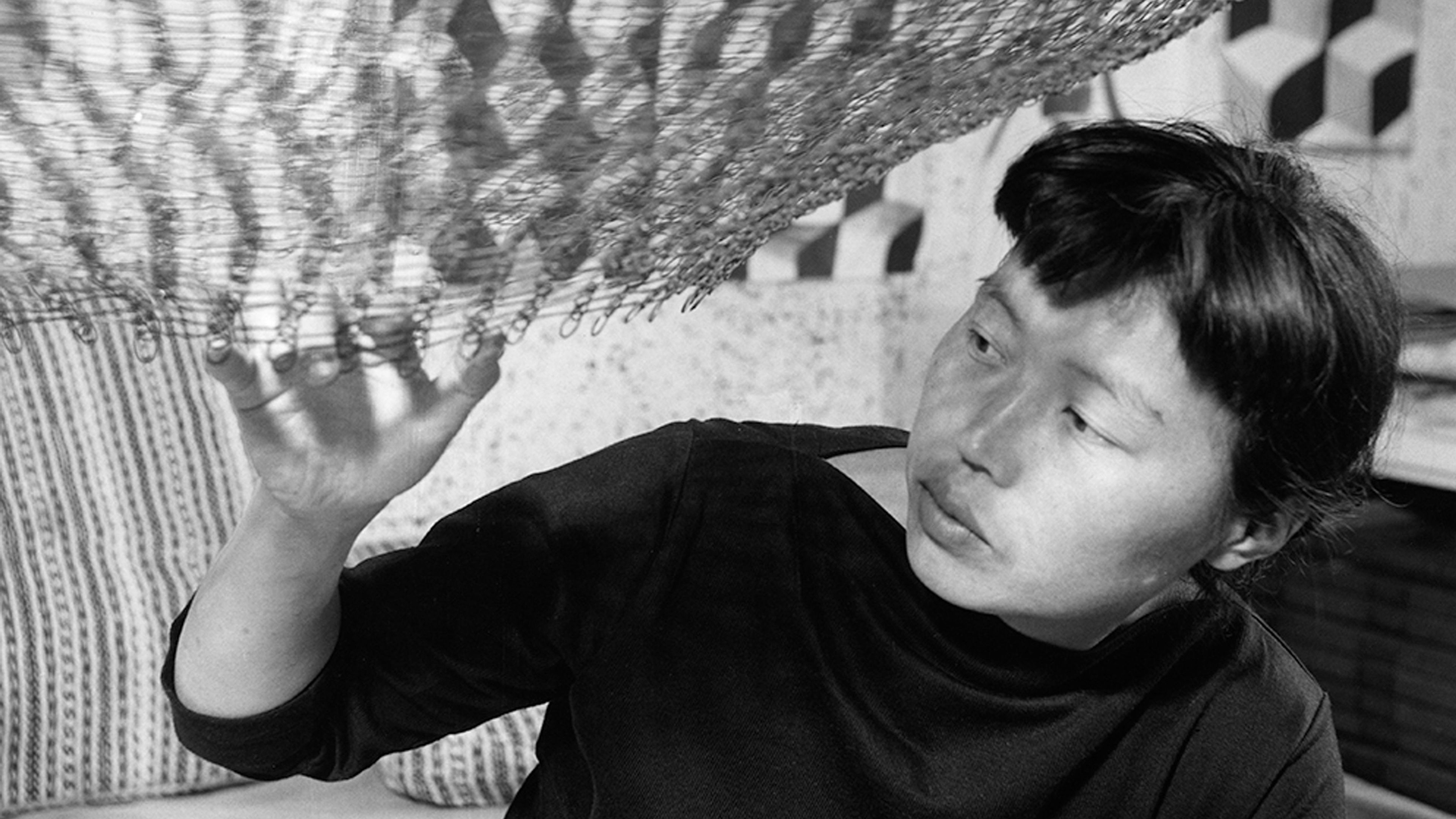
Ruth Asawa, 1957 (detail). © 2026 Imogen Cunningham Trust / Courtesy www.imogenCunningham.com All artwork © 2026 Ruth Asawa Lanier, Inc.

Learn More about Ruth Asawa