Los Angeles: 616 N Western Avenue
November 13, 2026–February 6, 2027
David Zwirner is pleased to announce an exhibition of works by Antiguan artist, writer, and polymath Frank Walter at the gallery’s 616 N Western Avenue location in Los Angeles. Curated by Ebony L. Haynes, Frank Walter: The World Through is the artist’s fifth solo exhibition with the gallery and the first dedicated presentation of his work on the West Coast. The show is one of several international projects celebrating Walter’s centenary and coincides with Frank Walter: Filosofia da cor at Museu de Arte Contemporânea da Bahia, Salvador, Brazil, which is on view until January 31, 2027, and travels to Instituto Tomie Ohtake, São Paulo, in March 2027.
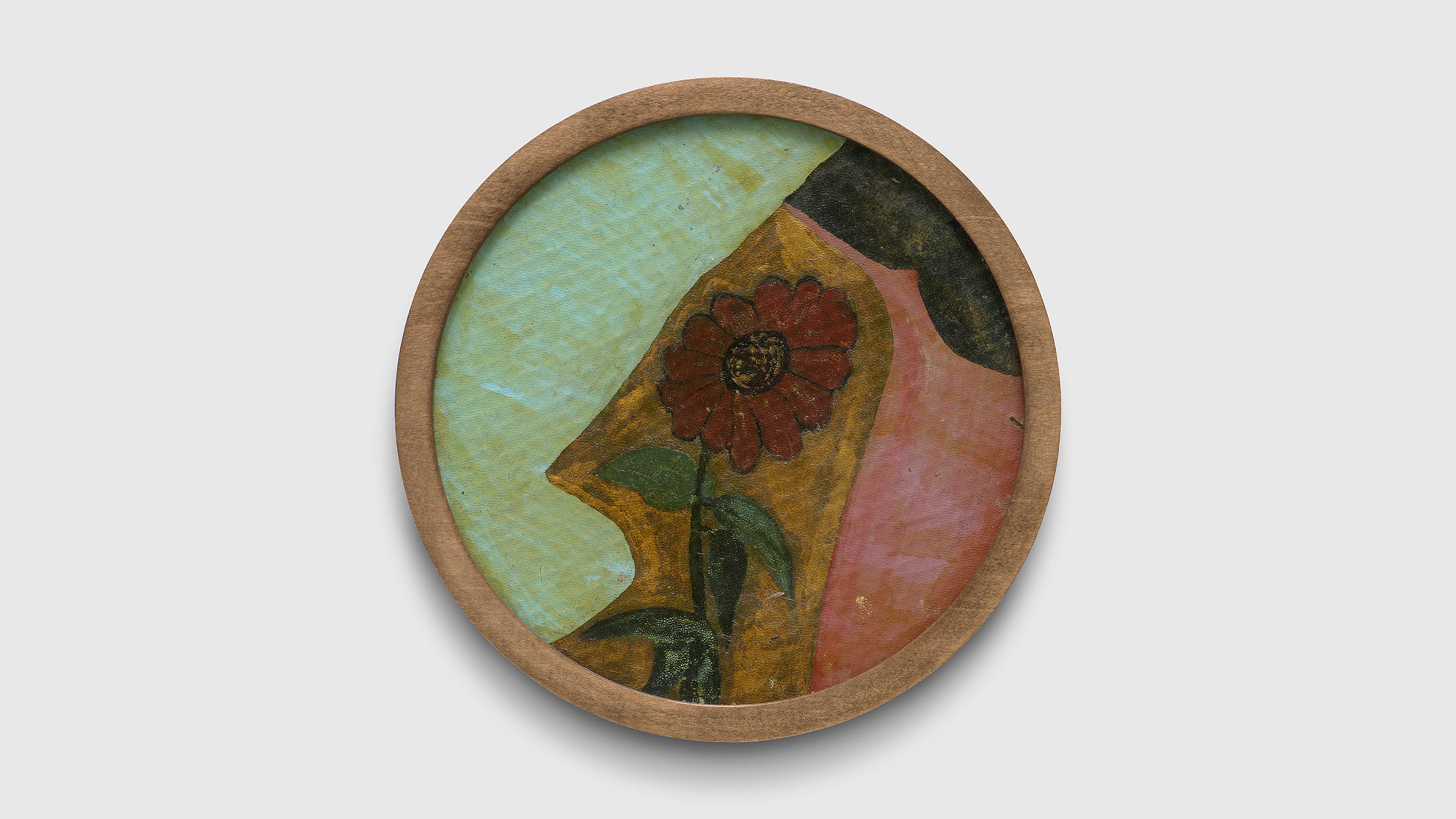
Exhibited in Los Angeles is a representative selection of paintings that span the breadth of Walter’s recurrent subject matter—vividly colored landscapes, vignettes, and portraits, among others—with a focused installation of intimate tondo paintings from the artist’s Spool series. Made late in Walter’s life and in part influenced by memories of a transatlantic journey he endured aboard a ship, these works reveal his fascination with both capturing and conjuring a unique vision of nature. Green lands, blue skies, vibrant foliage, and tropical and pastoral wildlife emerge from many of these small pictures; in others from the series, such as Untitled (Profile of an imaginary being) and Untitled (Beast, Red Land) (both n.d.), Walter uses the circular format to enclose figures real or imagined, as if the dreamlike compositions are being viewed through a fisheye lens.
Appearing like portholes and serving as portals, Walter’s Spool paintings embody many of the themes of his broader oeuvre and those of this exhibition, which also features a number of the artist’s celebrated landscapes. These small-scale works depicting brown hills, green-and-yellow mountains, and lavender skies are often painted on Polaroid film boxes and other unconventional supports. Informed by anthropologist Arjun Appadurai’s concept of the five “scapes” of globalization, the presentation in Los Angeles considers in particular how Walter’s compositions touch on the dreamscape, landscape, and ethnoscape, offering a multivalent understanding of the world he inhabited. As Ebony L. Haynes notes,
Walter’s dreamscapes move between the psychic and the visible. Ancestry, memory, fantasy, and the cosmos surface throughout, sometimes within the same image. Imagination offered Walter another way to locate himself in the world.
His landscapes begin with what he saw: hills, sea, vegetation, changing skies. But Walter rarely gives us place alone. A landscape can hold a memory or a history. Something observed can just as easily become something imagined.
The ethnoscapes consider people and identities in motion. Walter traveled between the Caribbean and Europe, but he also traveled through genealogy. People, places, and histories separated by geography or generations find their way into the same frame.
There are no firm boundaries between these scapes. One slips into another. Landscape becomes psychic, genealogy becomes geography, history enters the imaginary. Walter’s works are the portals between these worlds—places where the racial, ancestral, geographical, historical, and cosmic can meet.
Also on view is a selection of items from Walter’s Antigua studio—examples of personal effects that make tangible the artist’s multifaceted practice, one that touched the earthly and celestial, and the literal and surreal.
The gallery is grateful to Frank Walter’s family, and to consulting curator Dr. Barbara Paca OBE, for their support and collaboration.
Frank Walter (1926–2009) created a rich body of work that encompasses a variety of mediums, styles, and formats. His paintings range from highly individualistic, vividly colored landscapes to formally inventive and probing portraits to systematic, abstract compositions, all rendered in the artist’s absorbing palette and distinctive visual style. Walter was born Francis Archibald Wentworth Walter, on Horsford Hill, Antigua, in 1926. From a young age, Walter’s intellect was apparent to his family, and he quickly gained the admiration and respect of his local community. Feeling a deep connection to his native land, Walter studied agriculture and the sugar industry—the basis of Antigua’s economy—and at the age of twenty-two, he became the first person of color to work as a manager within the Antiguan Sugar Syndicate, where he helped modernize harvesting and production methods and sought to improve the status and labor conditions of the workers. He spent much of the 1950s traveling and learning advanced agricultural and industrial techniques in England, Scotland, and West Germany. During this time, he experienced the depths of racism and bias against people of color, and he often resorted to working as a day laborer to get by. While in Europe, Walter pursued a variety of creative and artistic outlets, including drawing and painting as well as writing prose, philosophical texts, and poetry. The artist returned to the Caribbean in 1961, where, in addition to painting, drawing, and writing, he began making sculptures, photographs, and sound recordings. In the early 1990s, Walter designed and built his home and studio on Bailey Hill in Antigua, where he spent the remainder of his time in relative isolation, reflecting, writing, and making art inspired by his thoughts, knowledge, journeys, and surroundings.
In addition to his retrospectives at the Pavilion of Antigua and Barbuda at the 57th Venice Biennale in 2017 and the Museum für Moderne Kunst, Frankfurt, in 2020, Walter has been the subject of solo exhibitions at The Douglas Hyde Gallery, Trinity College, Dublin, in 2013 and Harewood House, Leeds, United Kingdom, in 2017. In 2019, Walter’s art was featured at the 58th Venice Biennale as part of the group exhibition Find Yourself: Carnival and Resistance, exploring Carnival in the culture of Antigua and Barbuda, curated by Barbara Paca and Nina Khrushcheva. His work was included in the recent group exhibitions The Inner Island, curated by Jean-Marie Gallais at Fondation Carmignac, Hyères, France (2023); Le monde comme il va at the Bourse de Commerce – Pinault Collection, Paris (2024); Après la fin. Cartes pour un autre avenir at Centre Pompidou-Metz, France (2025); and Outside, curated by Matthew Higgs for Karma, Maine (2026).
The artist was the subject of the solo exhibitions Frank Walter: Artist, Gardener, Radical at the Garden Museum, London (2023) and Frank Walter: To Capture a Soul at The Drawing Center, New York (2024). In 2024, David Zwirner Books published the catalogue By Land, Air, Home, and Sea: The World of Frank Walter, which features new scholarship and a contribution from Hilton Als, curator of the exhibition of the same title at David Zwirner, New York (2022).
Walter’s work is in the permanent collections of Glenstone, Potomac, Maryland; Minneapolis Institute of Art; Museum für Moderne Kunst, Frankfurt; Pinault Collection, Paris; and Rennie Collection, Vancouver.
The Frank Walter Catalogue Raisonné project is currently being undertaken by the Walter family and Barbara Paca.
For all press inquiries, contact:
Elizabeth Gartner egartner@davidzwirner.com
Julia Lukacher jlukacher@davidzwirner.com