Steven Shearer: My Moody Muse
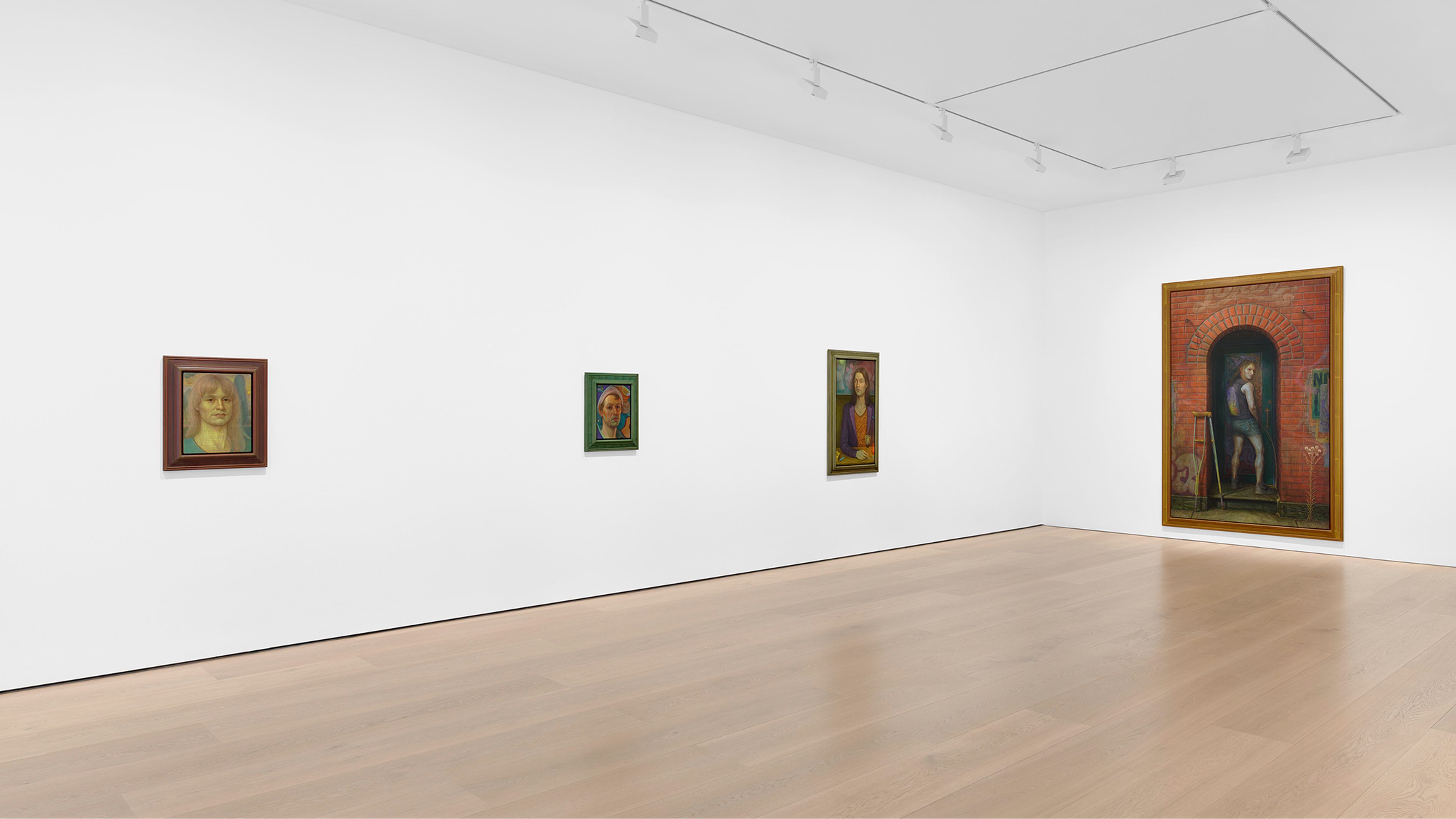
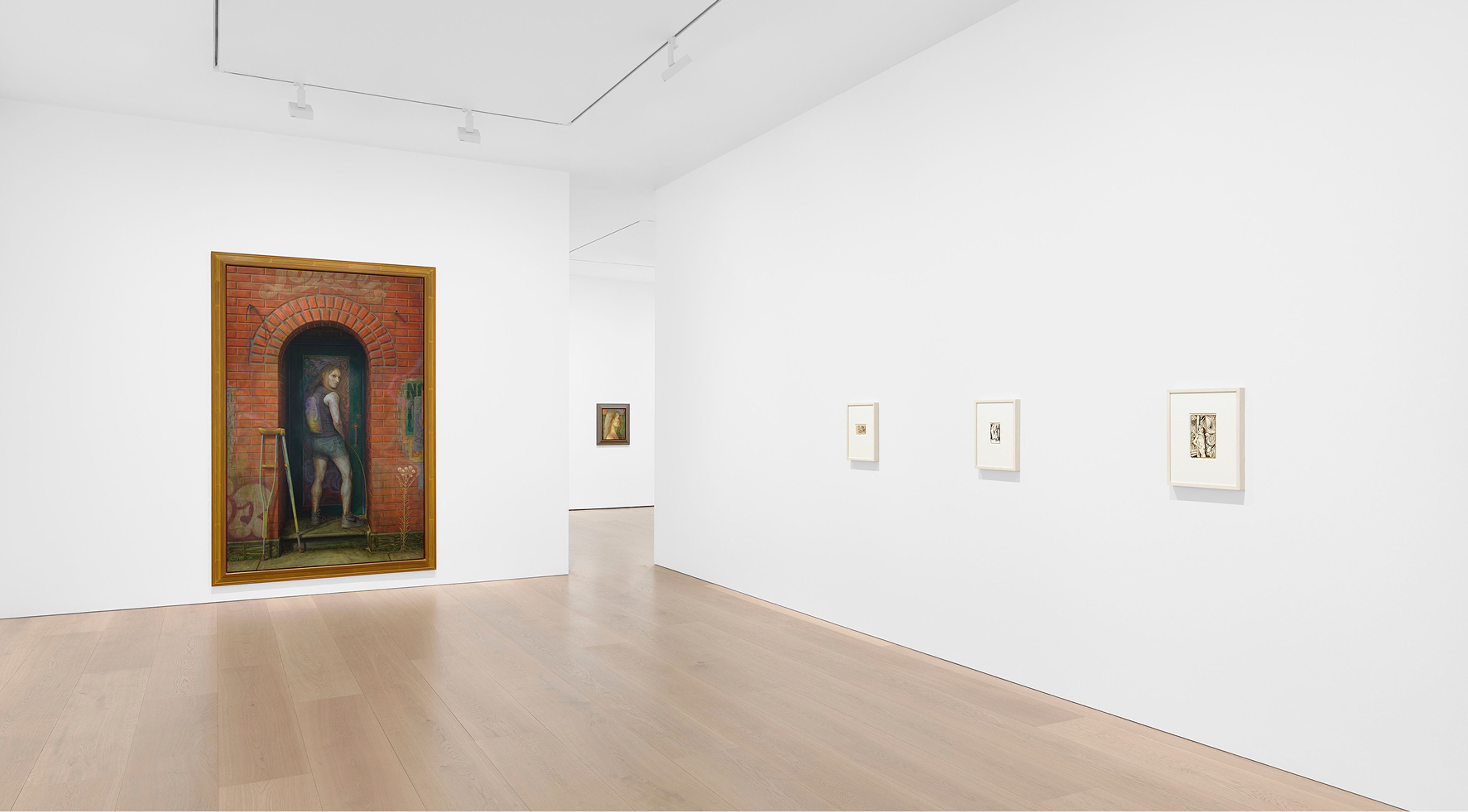
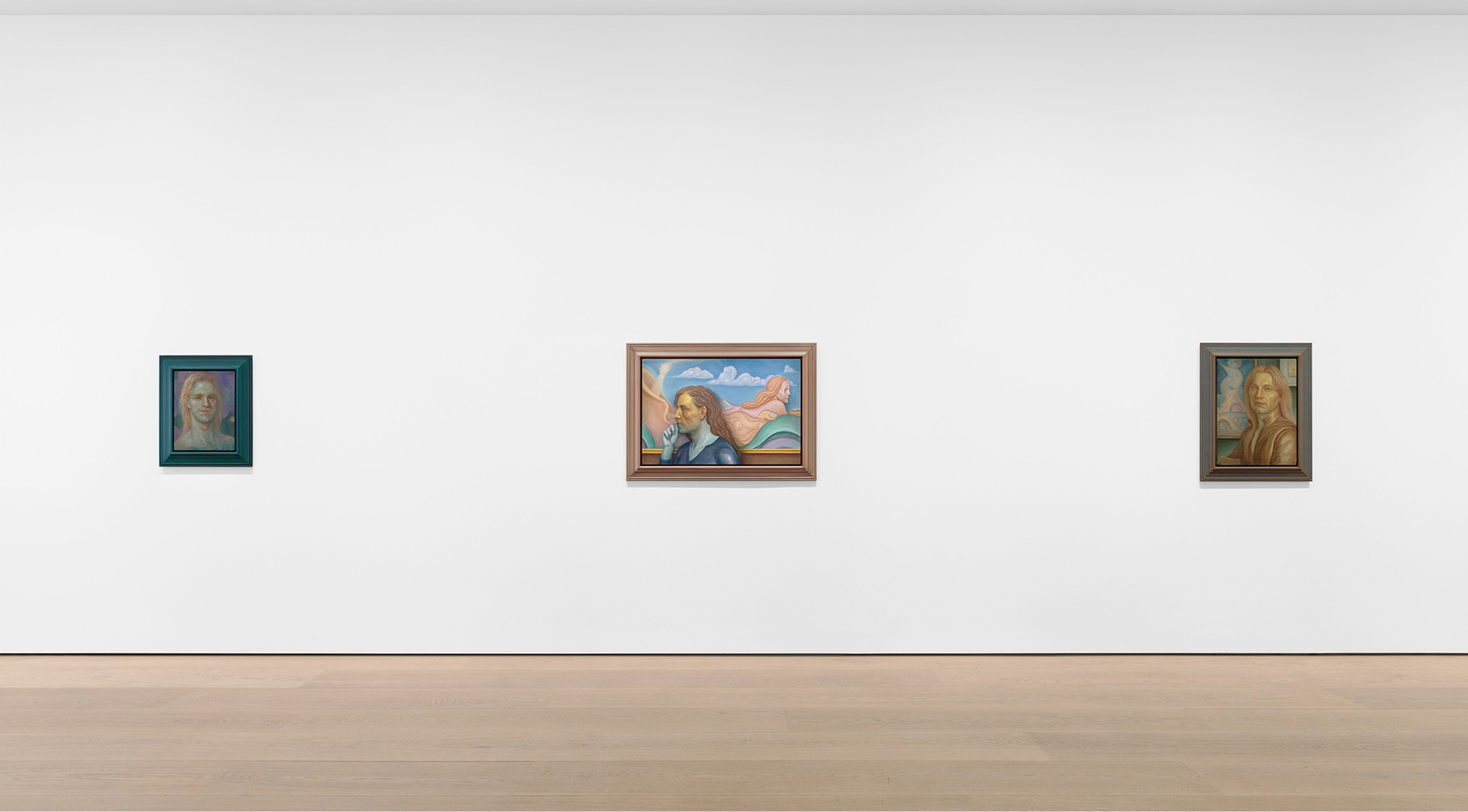
Installation view, Steven Shearer: My Moody Muse, David Zwirner, London, 2026

Now Open

June 4—July 31, 2026

Opening Reception

Thursday, June 4, 6–8 PM

Location

London

24 Grafton Street

London W1S 4EZ

Tue, Wed, Thu, Fri, Sat: 10 AM-6 PM

David Zwirner is pleased to announce an exhibition of work by Canadian artist Steven Shearer at the gallery’s location in London. In My Moody Muse, Shearer presents new figurative oil paintings alongside significant loans of recent works and a selection of drawings, which collectively consider his engagement with the genre of portraiture. This exhibition marks the artist’s first solo presentation in the United Kingdom in nearly twenty years, and comes ahead of his forthcoming solo exhibition at the Aspen Art Museum in summer 2027.

Explore

Explore All Works

Steven Shearer has long cultivated an aura of mystery around both himself and his work. His figures—drawn from popular and underground culture, art history, memory, fantasy, and now increasingly from synthesized digital processes—rarely offer straightforward readings, and are instead left open to viewers’ interpretations, assumptions, and reflections.

Steven Shearer’s studio, 2025. Photo courtesy of the artist

“[Shearer’s paintings] suggest but never state directly, alluding and eluding at the same time. Perhaps this is the point of the works.… They are portraits simultaneously of an individual and of an archetype, located somewhere between the imaginary and the real.”

—Nicholas Cullinan, director, the British Museum, London
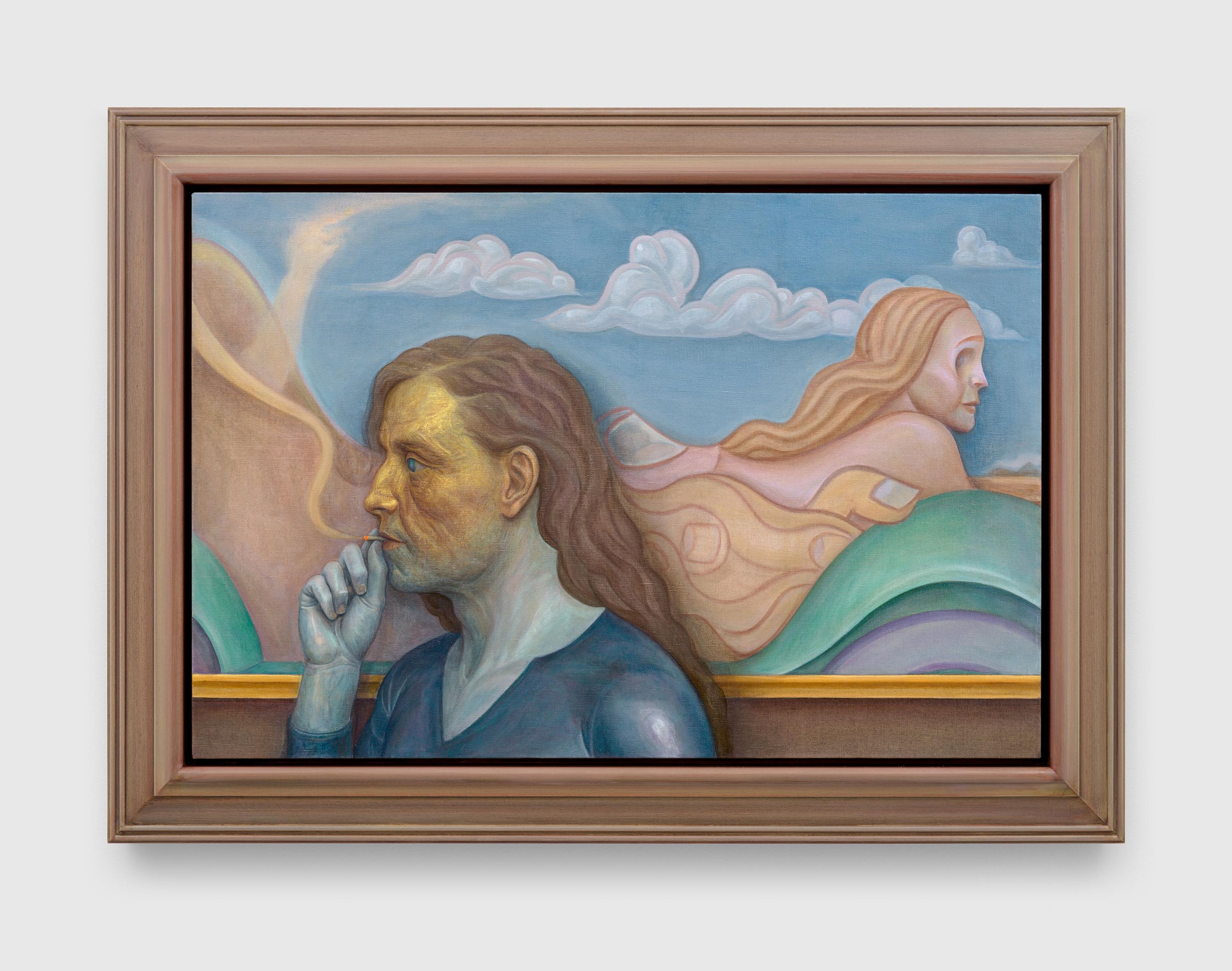
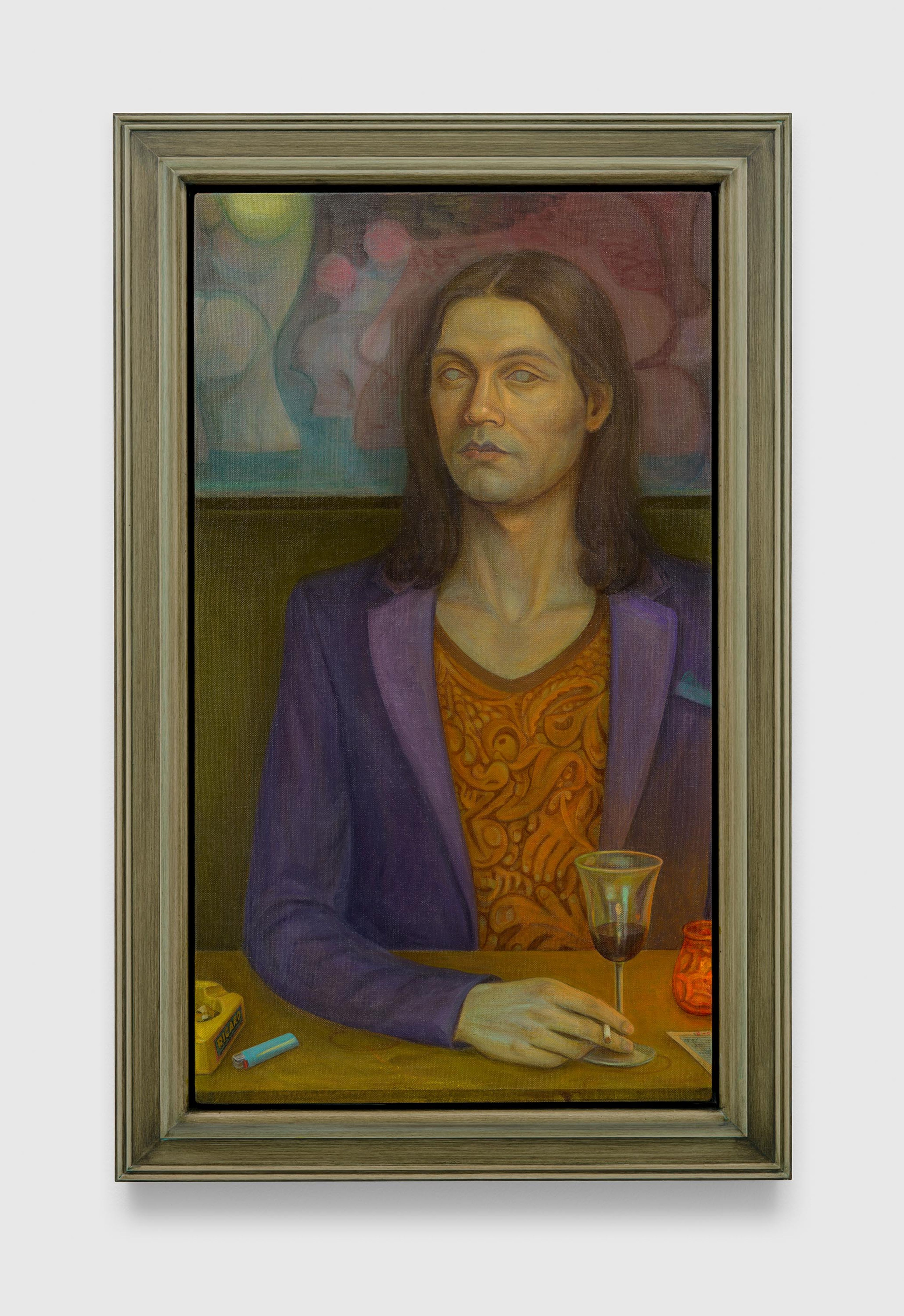
Shearer’s new exhibition at our London gallery brings together a body of paintings that feel unusually exposed in emotional tenor, even as they preserve the artist’s characteristic opacity. If Shearer’s early works often mused on youth and its subcultural expressions, a number of the works gathered here present a notable shift.

“Like any artist, and probably like any person, I live in a somewhat imaginary world, part memory, part cyber-space, part picture-space.”

—Steven Shearer in conversation with author Jim Lewis
Steven Shearer’s studio, 2025. Photo courtesy of the artist
Steven Shearer’s studio, 2025. Photo courtesy of the artist
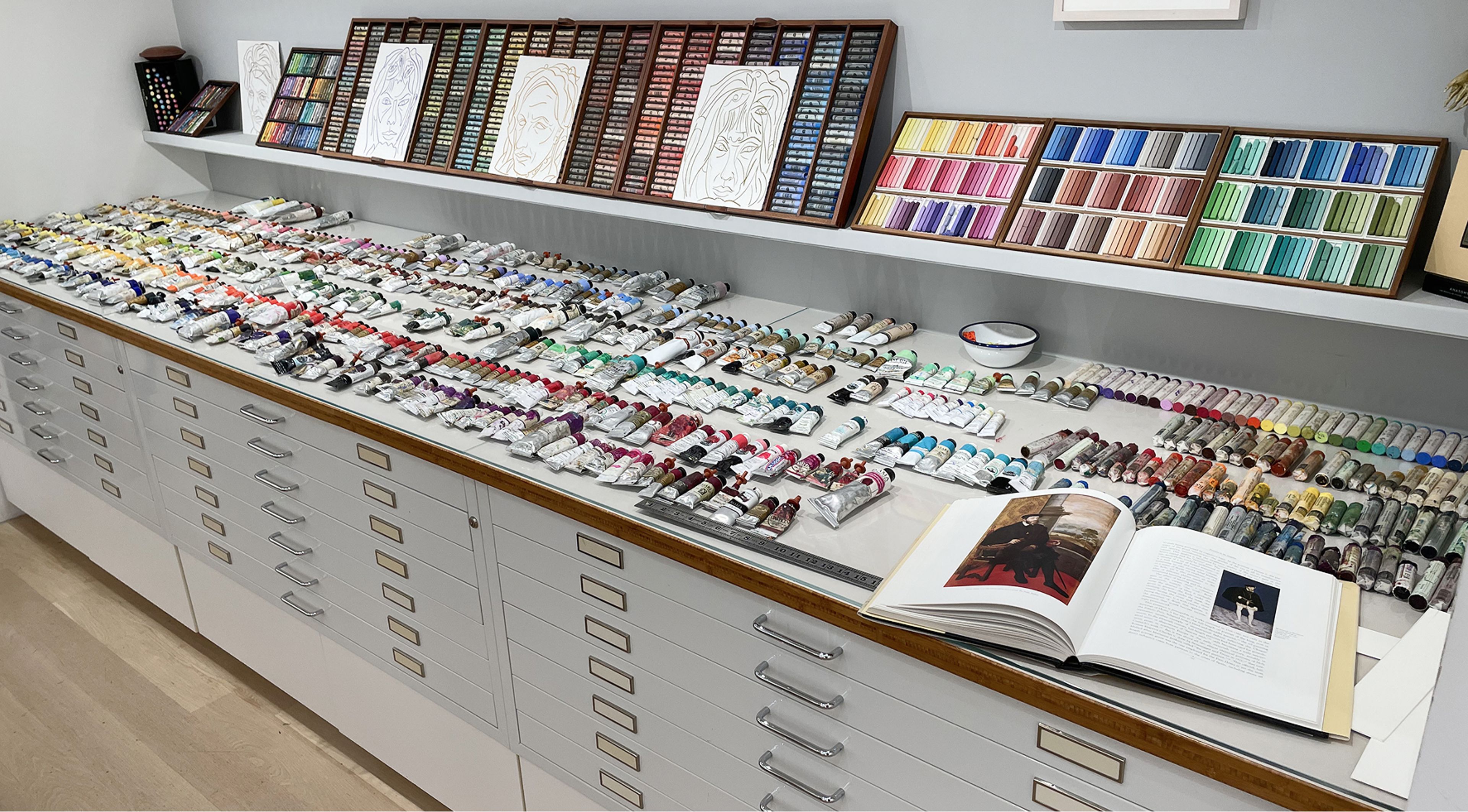
Steven Shearer’s studio, 2024. Photo courtesy of the artist
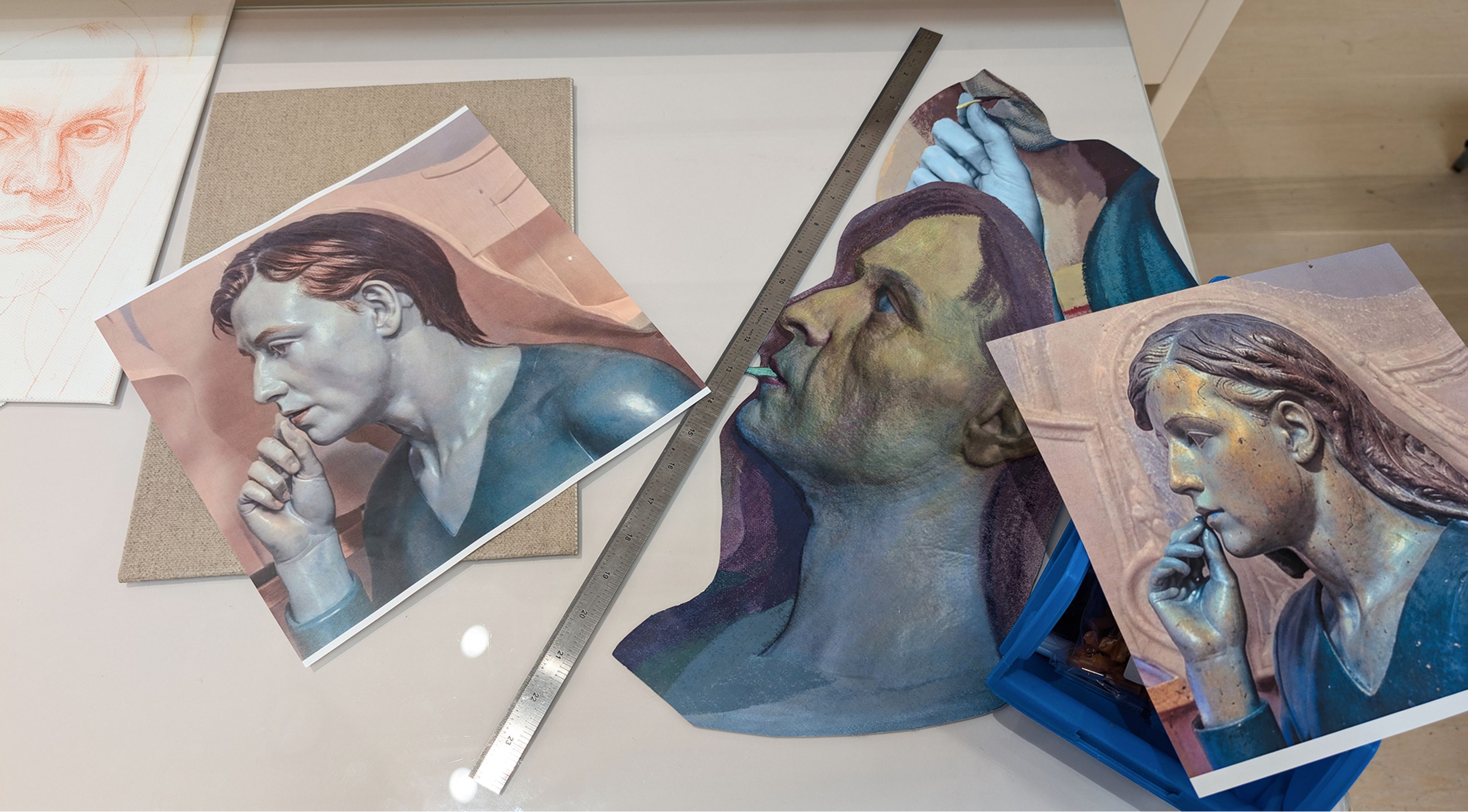
Steven Shearer’s studio, 2025. Photo courtesy of the artist
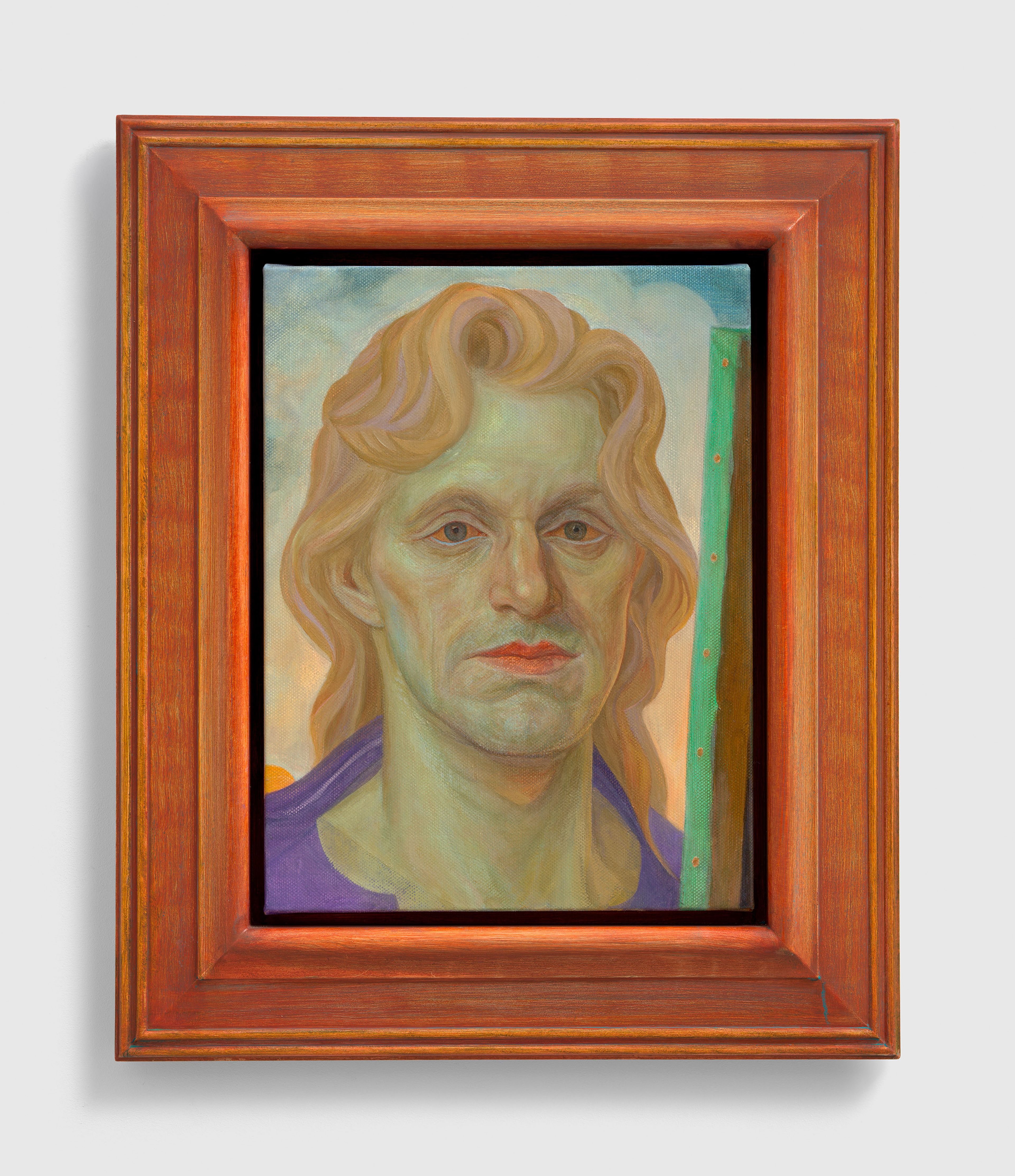
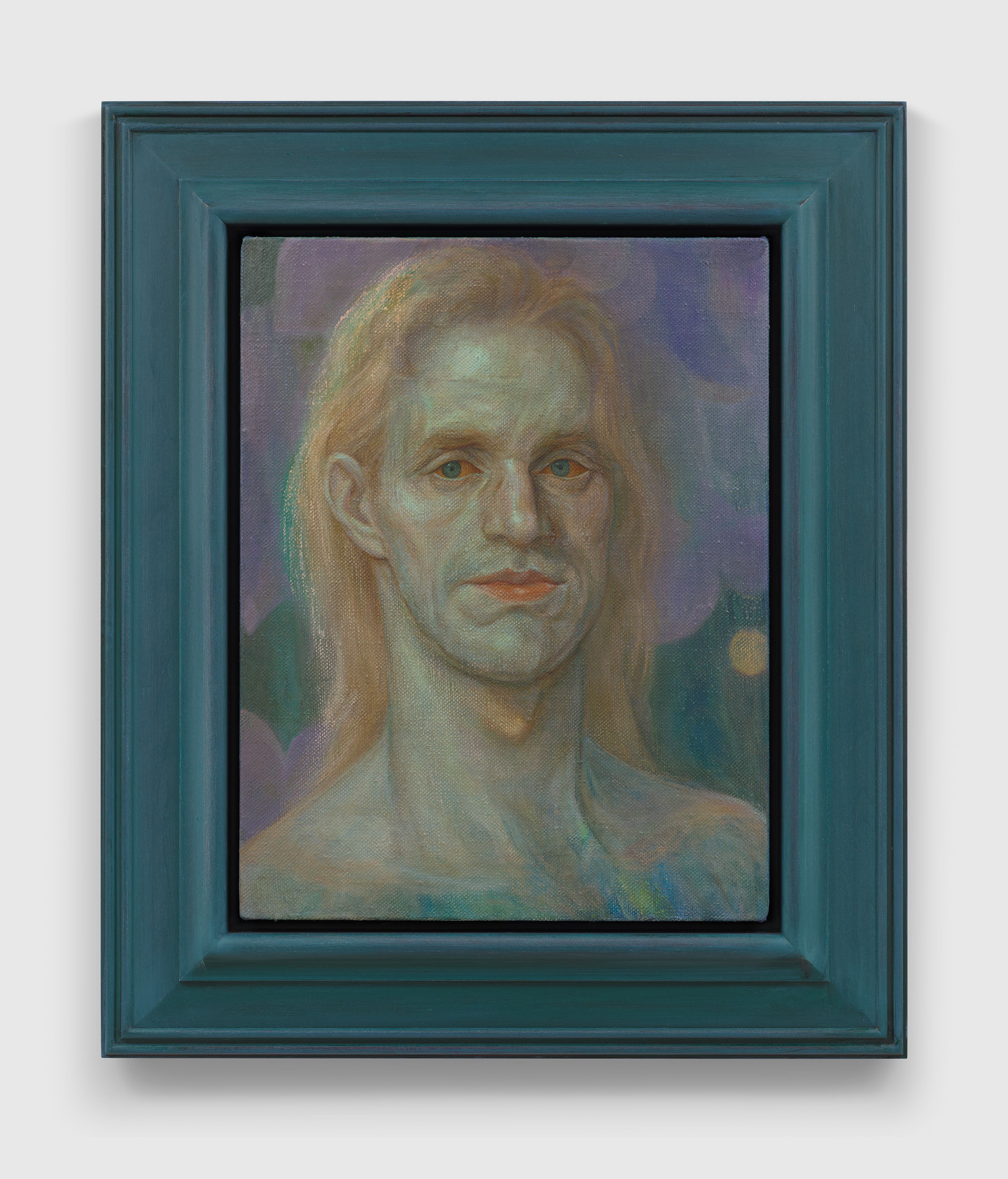
 

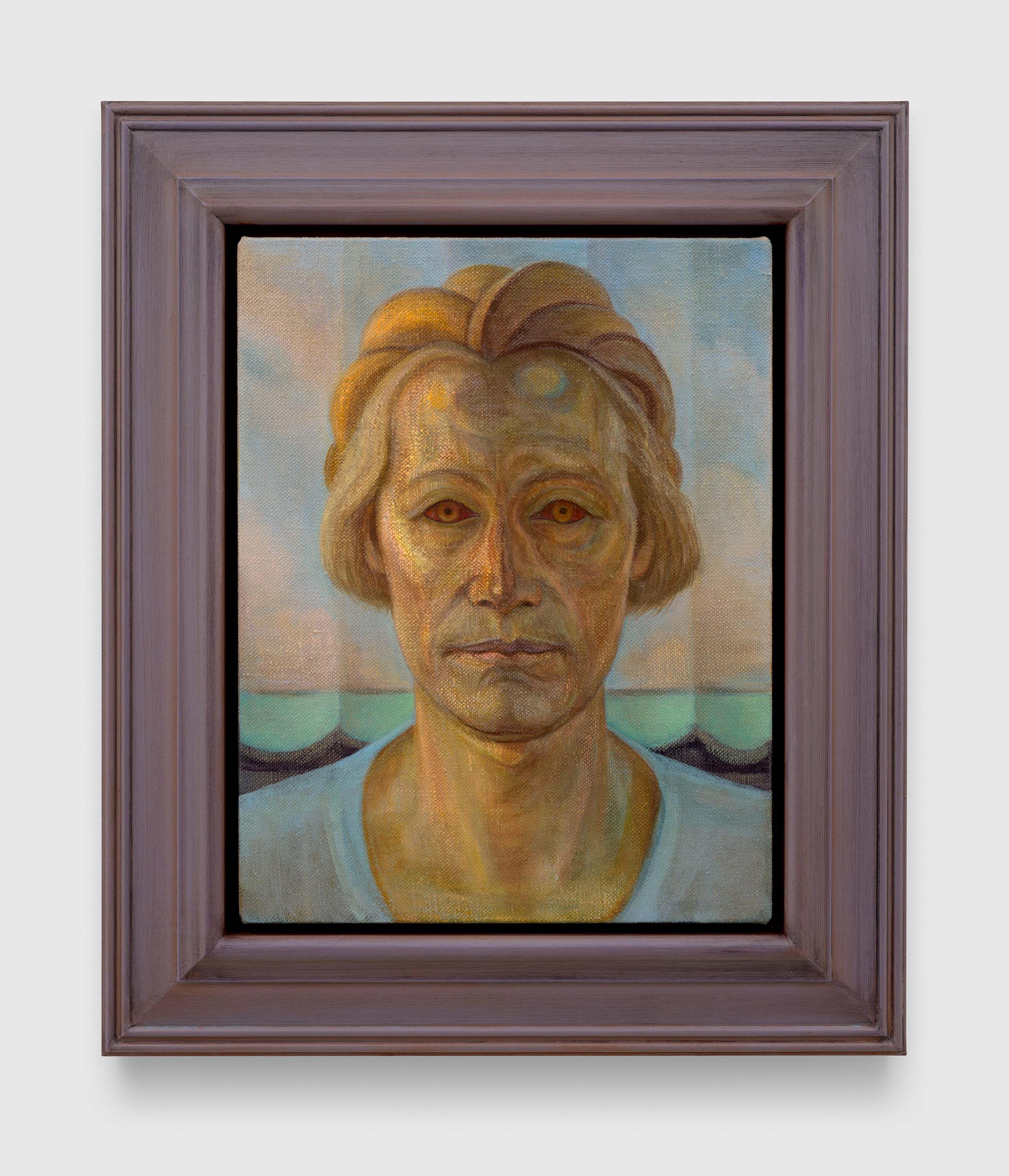
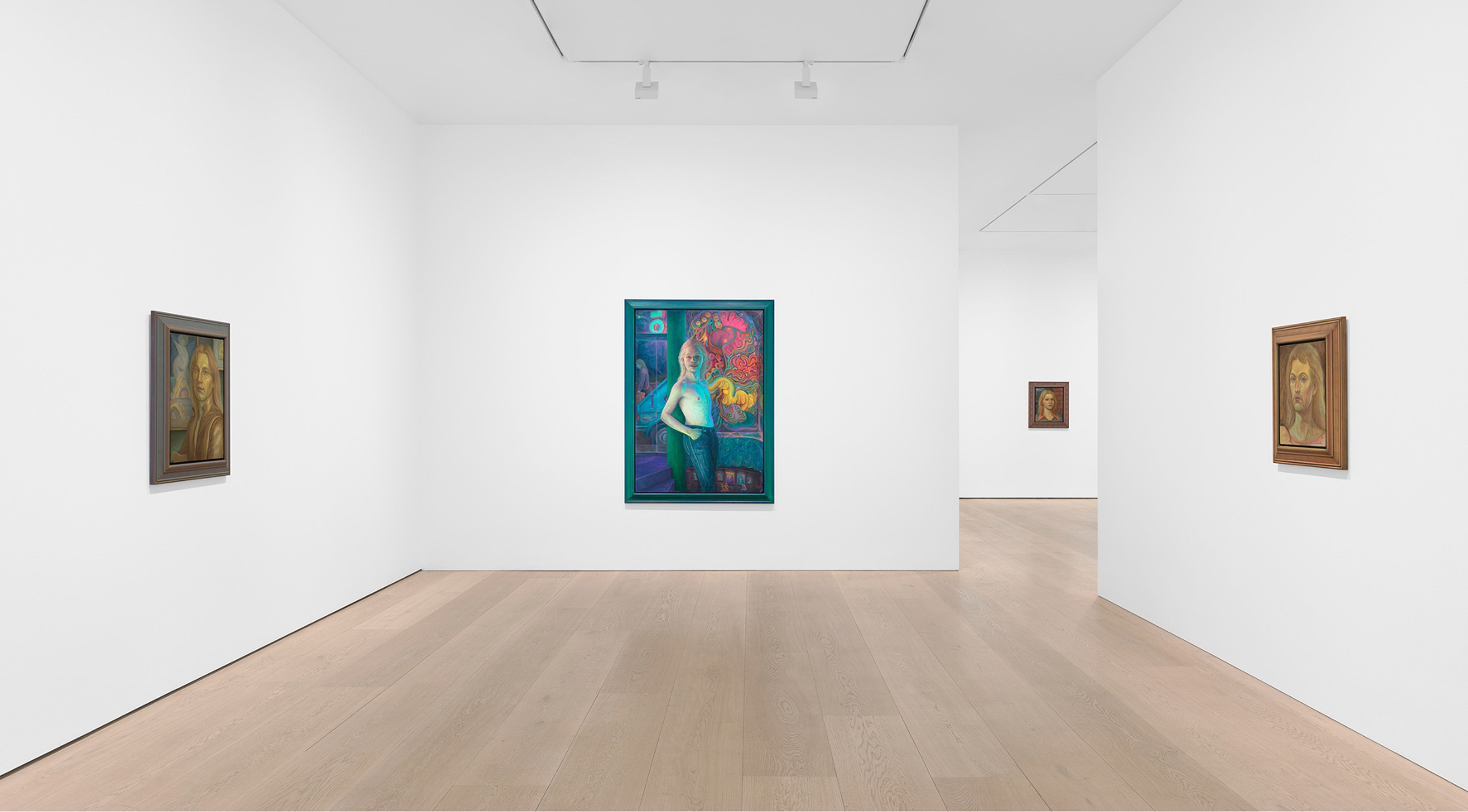
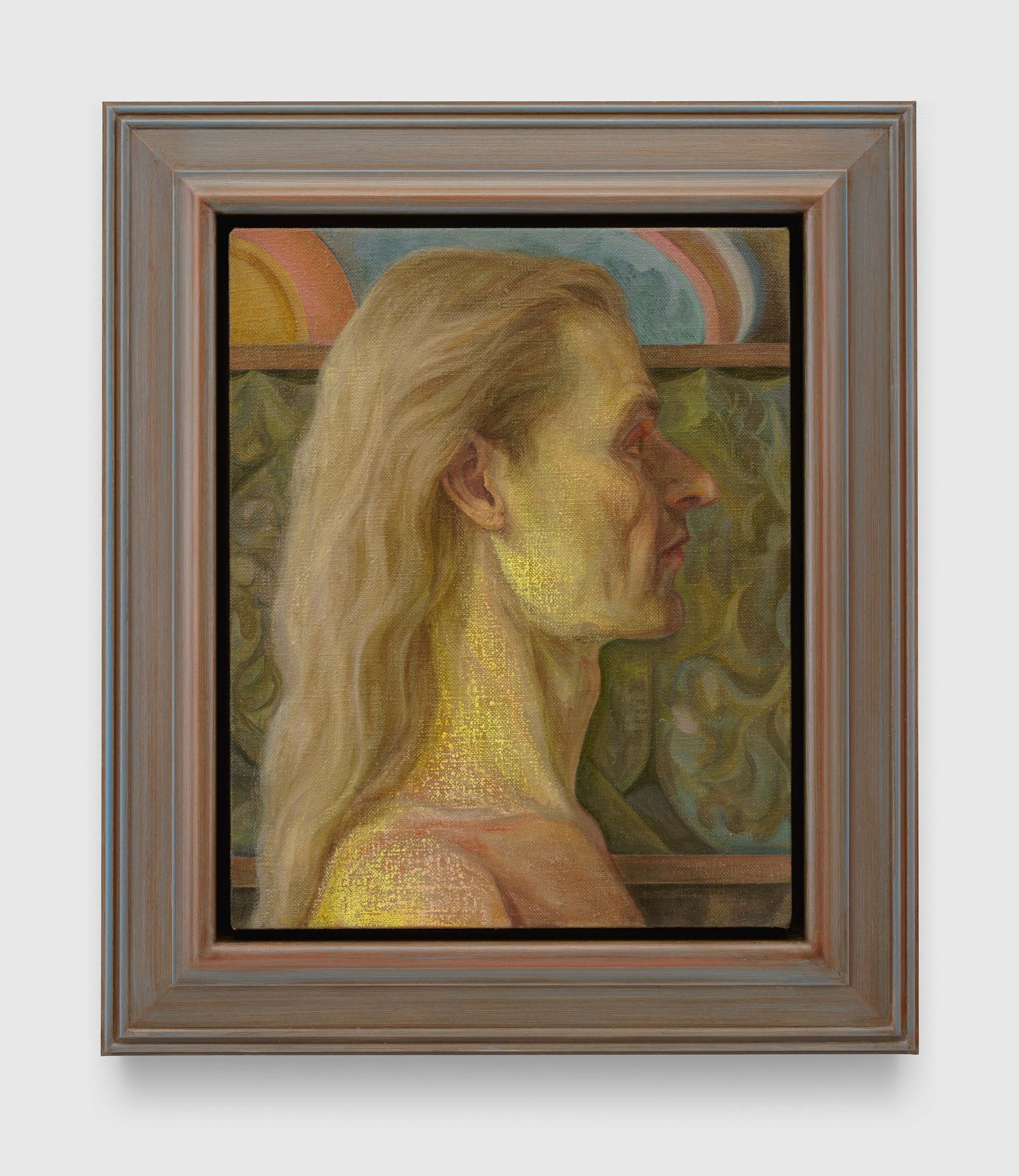
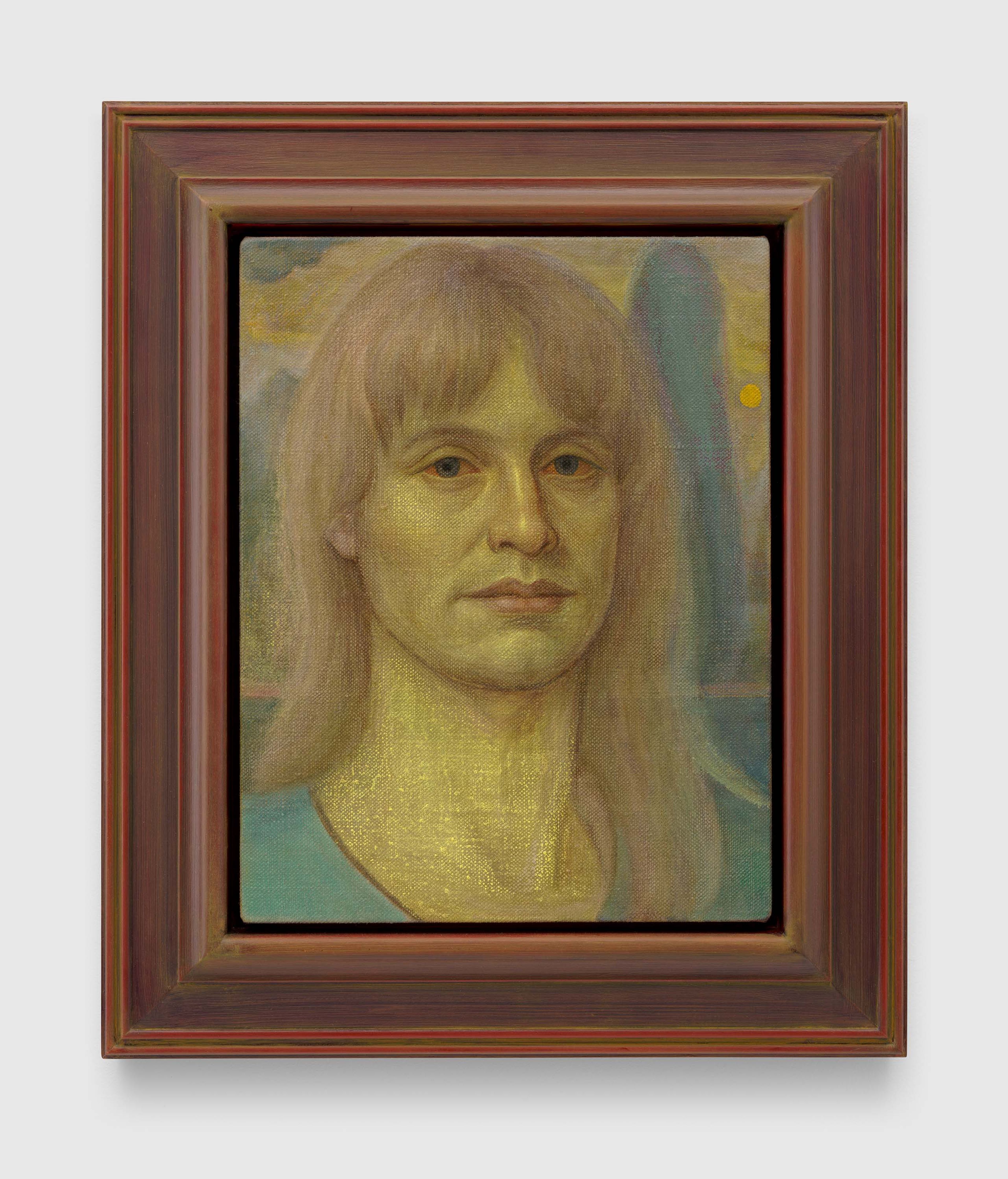
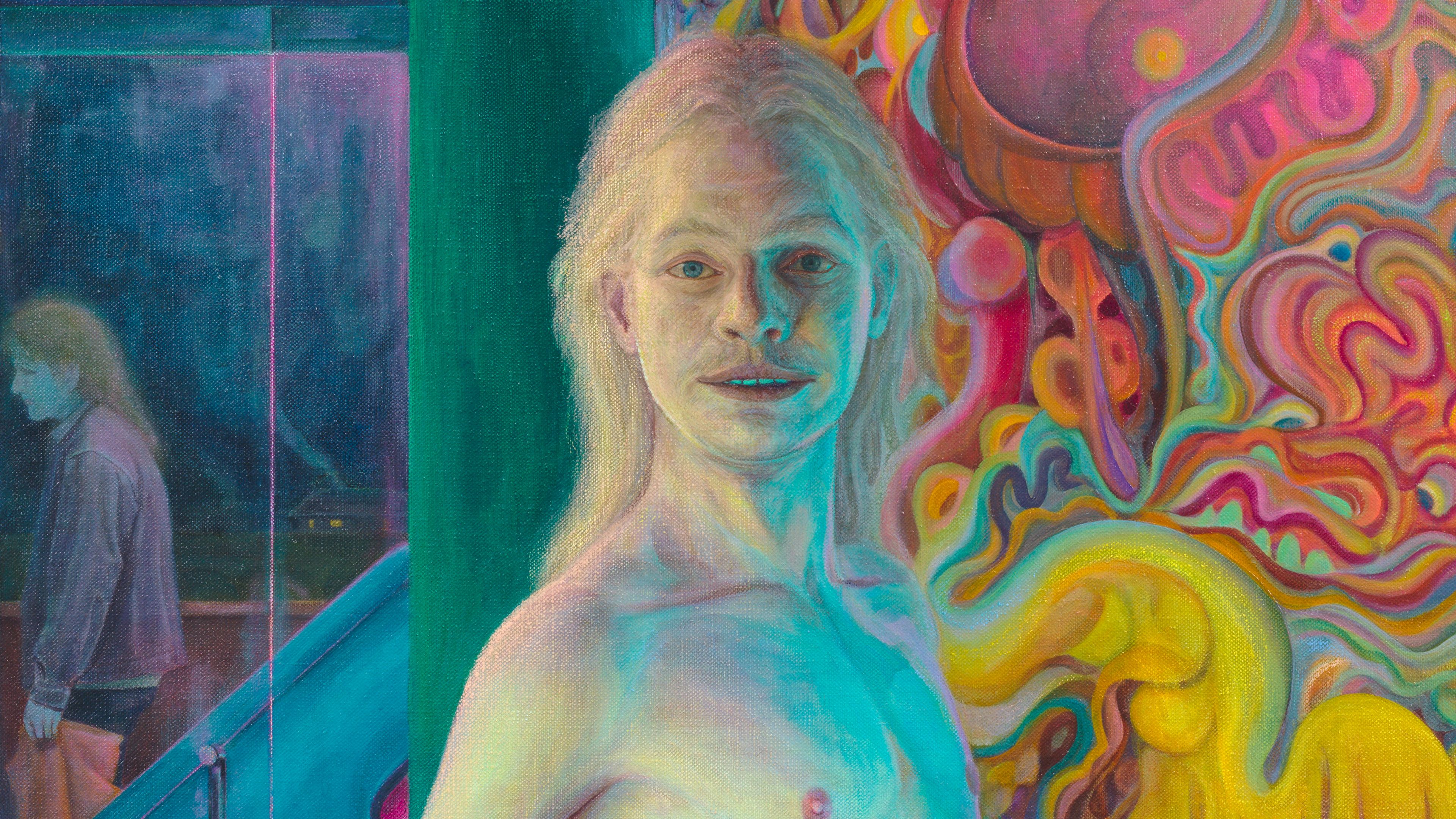
Across these new portraits, there is a palpable sense of molting, erosion, and bodily fragility that reflects a deeper reckoning with time and mortality. Shearer’s figures appear caught in states of transformation: faces seem to soften or decay, flesh illuminates as it jaundices, and bodies oscillate between sensuality and ruin.

Some paintings present youthful figures whose beauty feels eternal, almost mythic in its suspension outside of time. Others confront aging more directly, depicting characters who seem burdened by psychic weight, memory, and the inevitability of decline. Together, they form a meditation on impermanence that marks one of the most emotionally resonant developments in the artist’s practice to date.

“l think my approach is somewhat personal, somewhat fantastical, and somewhat anthropological; it's a combination of my autobiographical context and some sense of trying to connect to other people’s experiences.”

—Steven Shearer

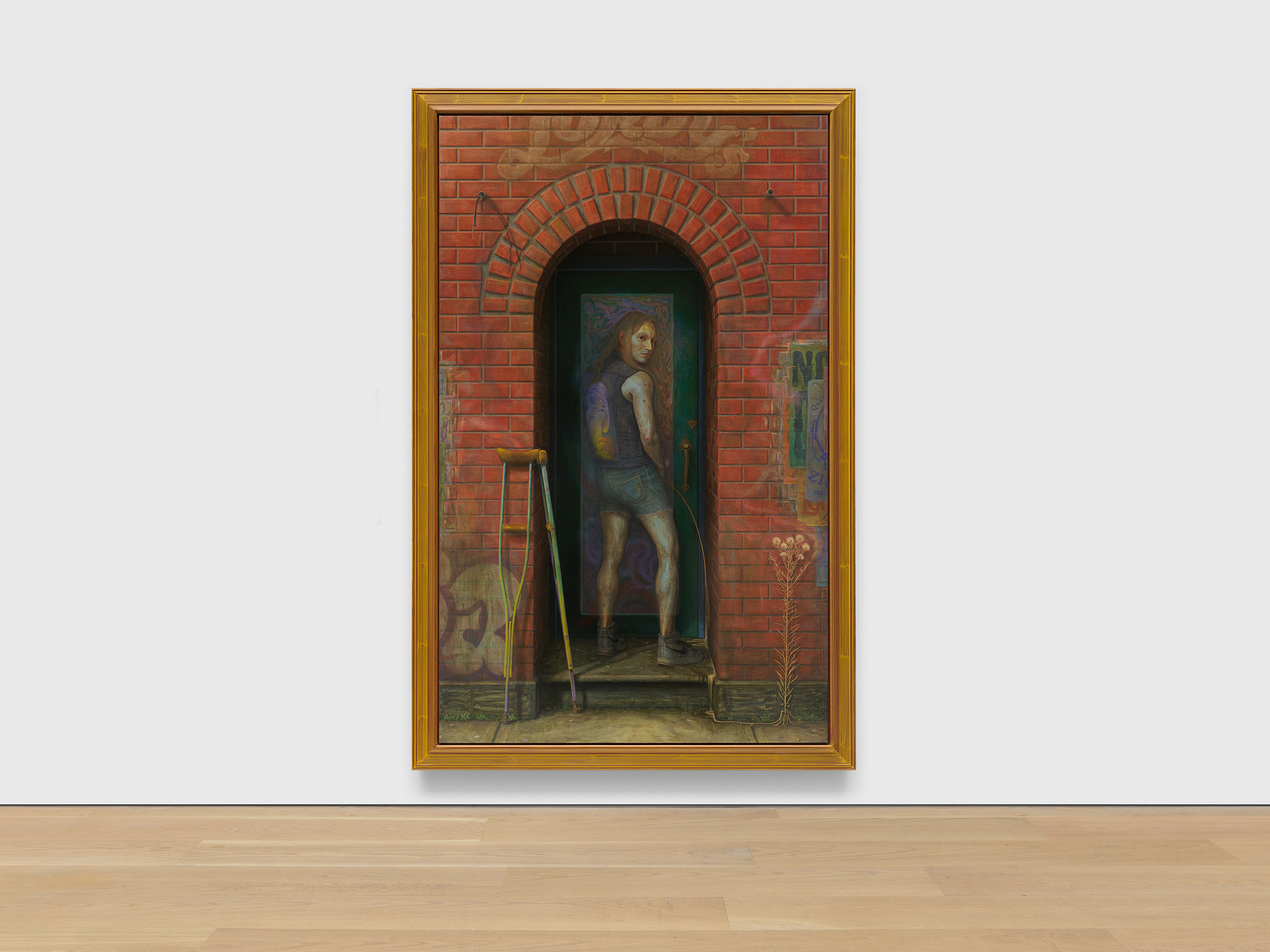
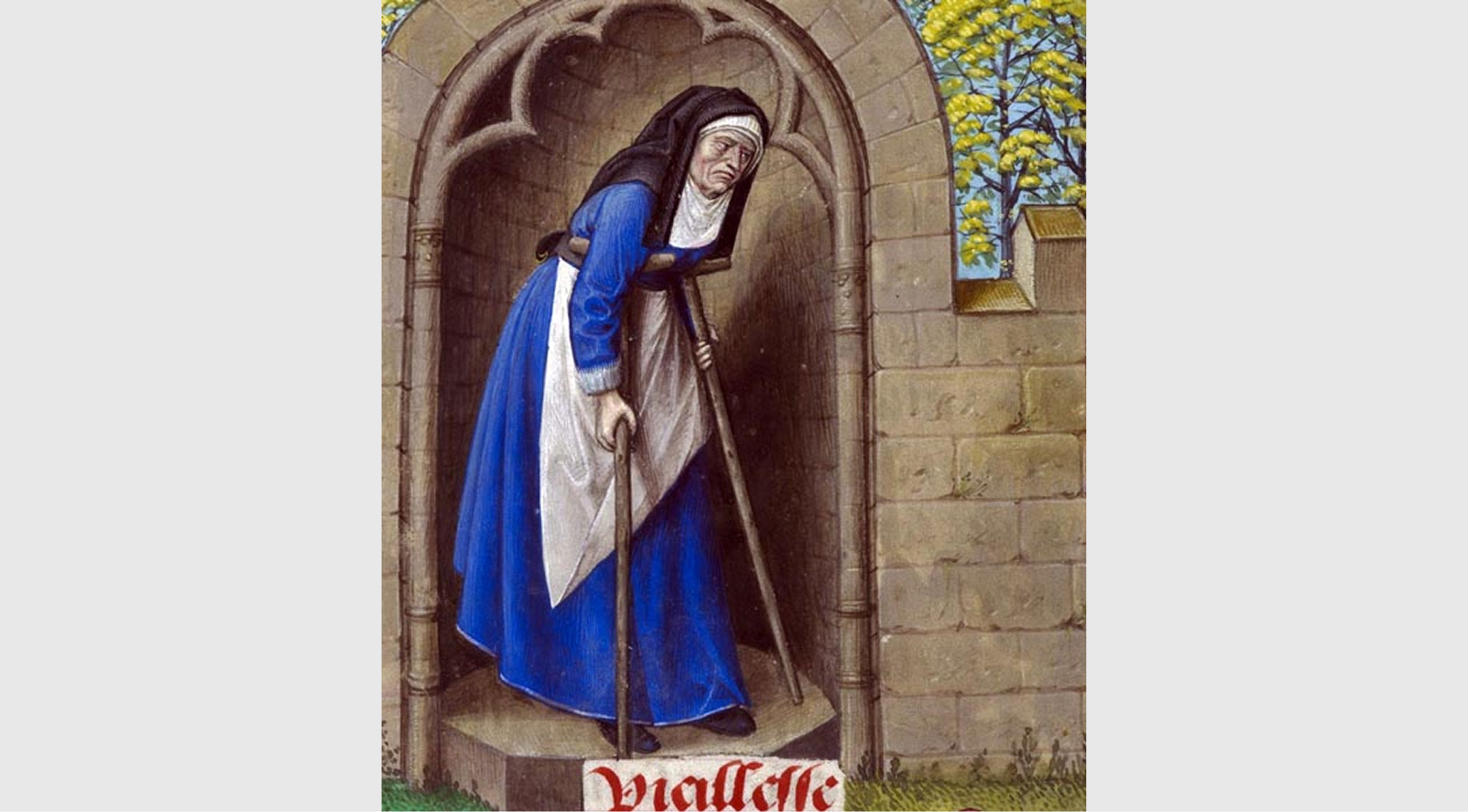
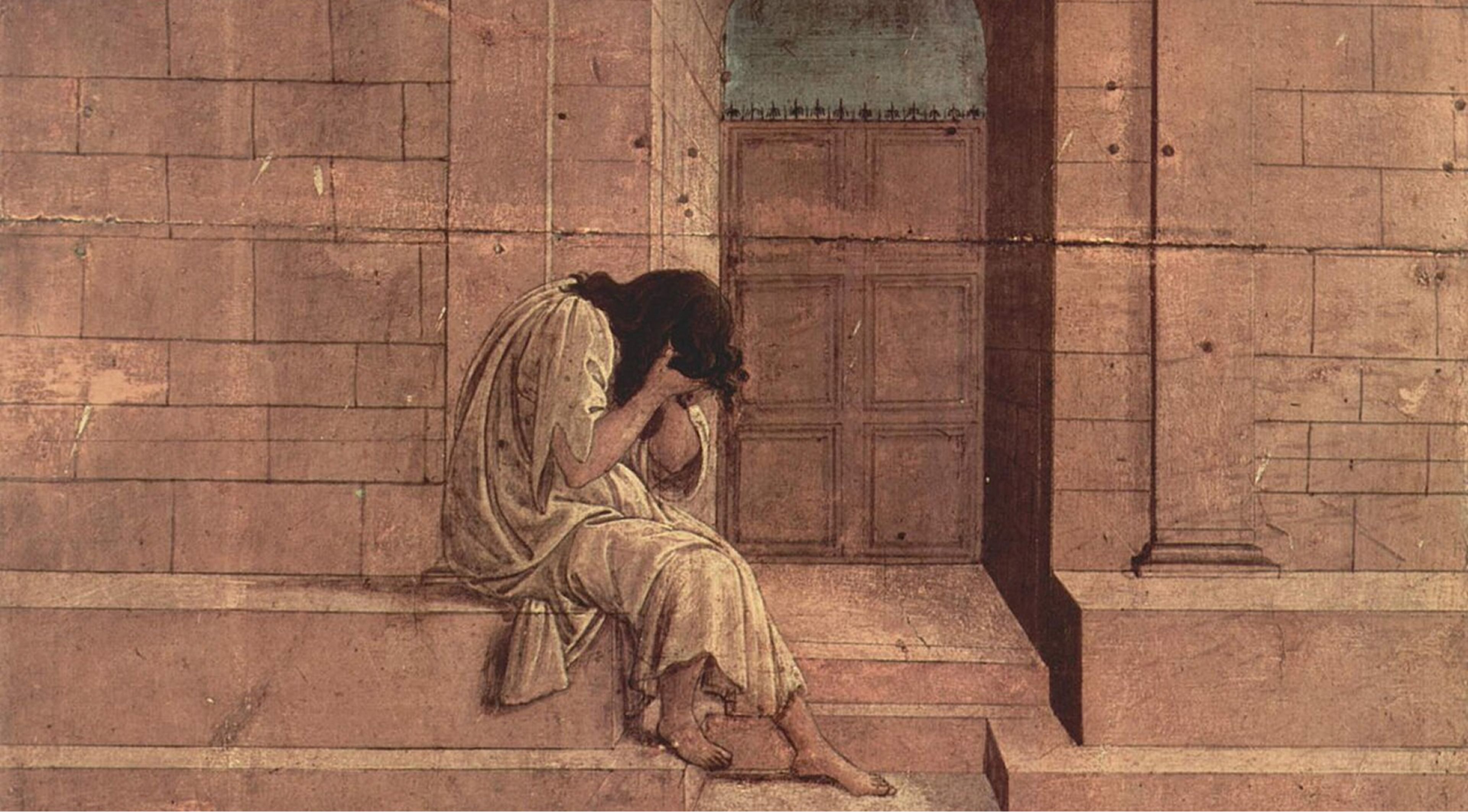
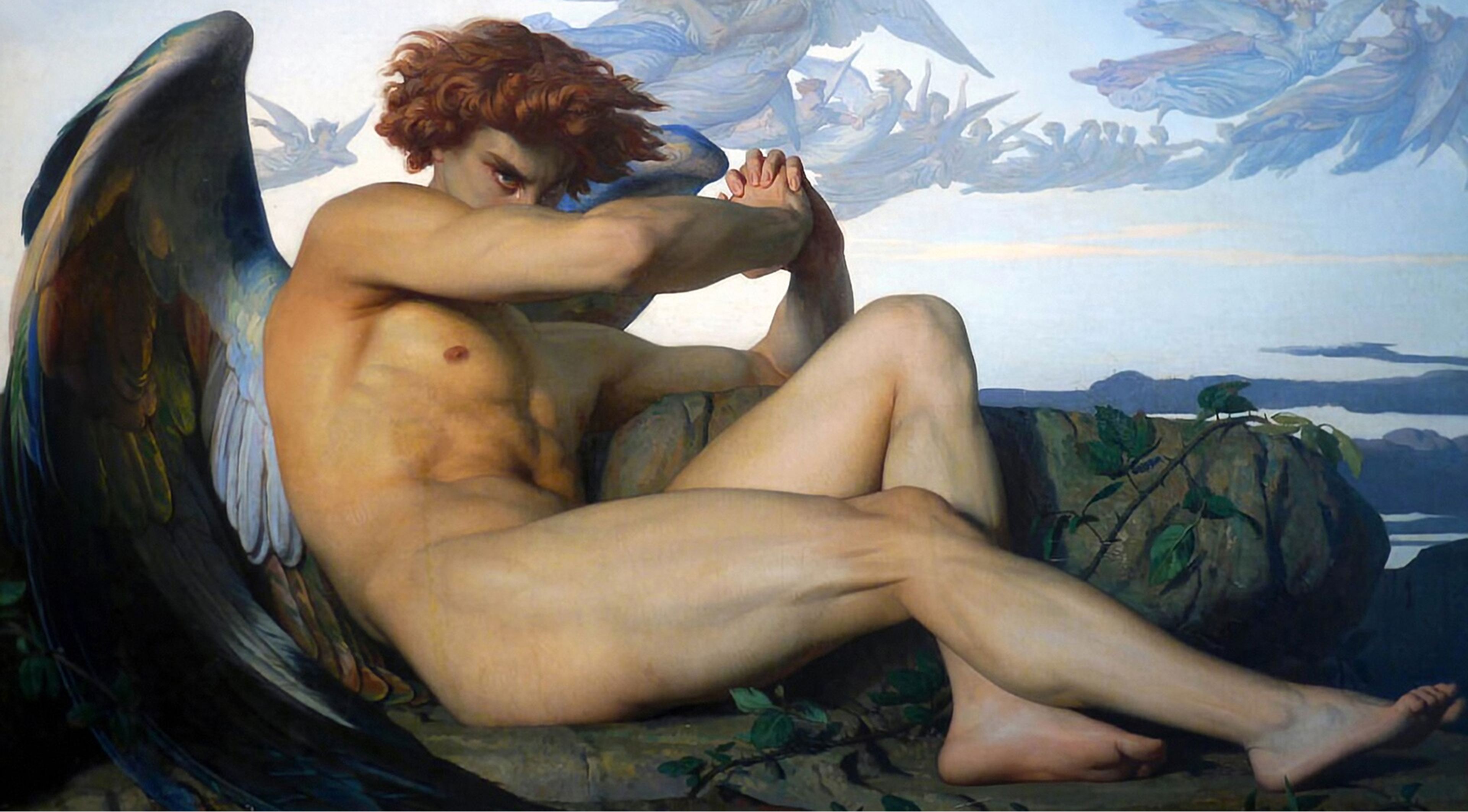
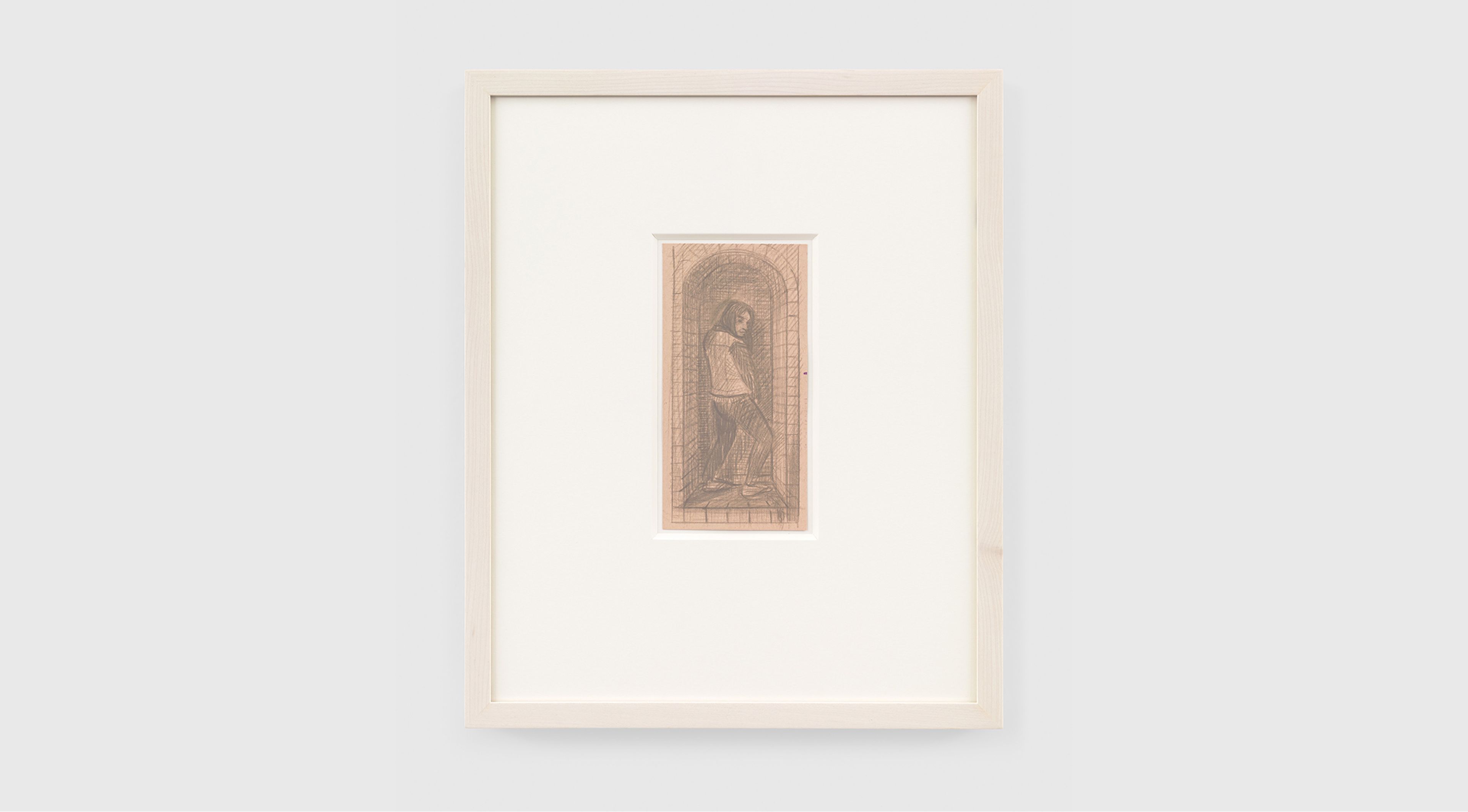
The Wizzer, Shearer’s largest painting to date, presents a long-haired figure in a narrow doorway arch. Under a spare brick frame, Shearer paints an odd kind of religious scene that conjures the composition of The Outcast from Sandro Botticelli’s Scenes from the Story of Esther, or Alexandre Cabanel’s The Fallen Angel. The character’s pallid skin harks back to the flesh of dying saints, the multicolored crutches perhaps a pair of broken angel’s wings

Anonymous, Vieillesse (Old Age) from a manuscript of the Roman de la Rose (Romance of the Rose), c. 1490–1500. Collection of The British Library, London

Sandro Botticelli, The Outcast from Scenes from the Story of Esther, c. 1496. Collection of Palazzo Pallavicini-Rospigliosi, Rome

Alexandre Cabanel, The Fallen Angel, 1847. Collection of Musée Fabre, Montpellier

Steven Shearer, Study for Wizzer, 2014


The ‘wizzer,’ of course, is the painter; and Steven Shearer’s portrait of the artist as a shameless young pisser, if no longer entirely able-bodied, clearly expands the scope of his evolving ruminations on the ambiguous tangle that ties together manhood and artistry.”

—Dieter Roelstraete, curator, Neubauer Collegium for Culture and Society at the University of Chicago

Installation view, Steven Shearer: My Moody Muse, David Zwirner, London, 2026

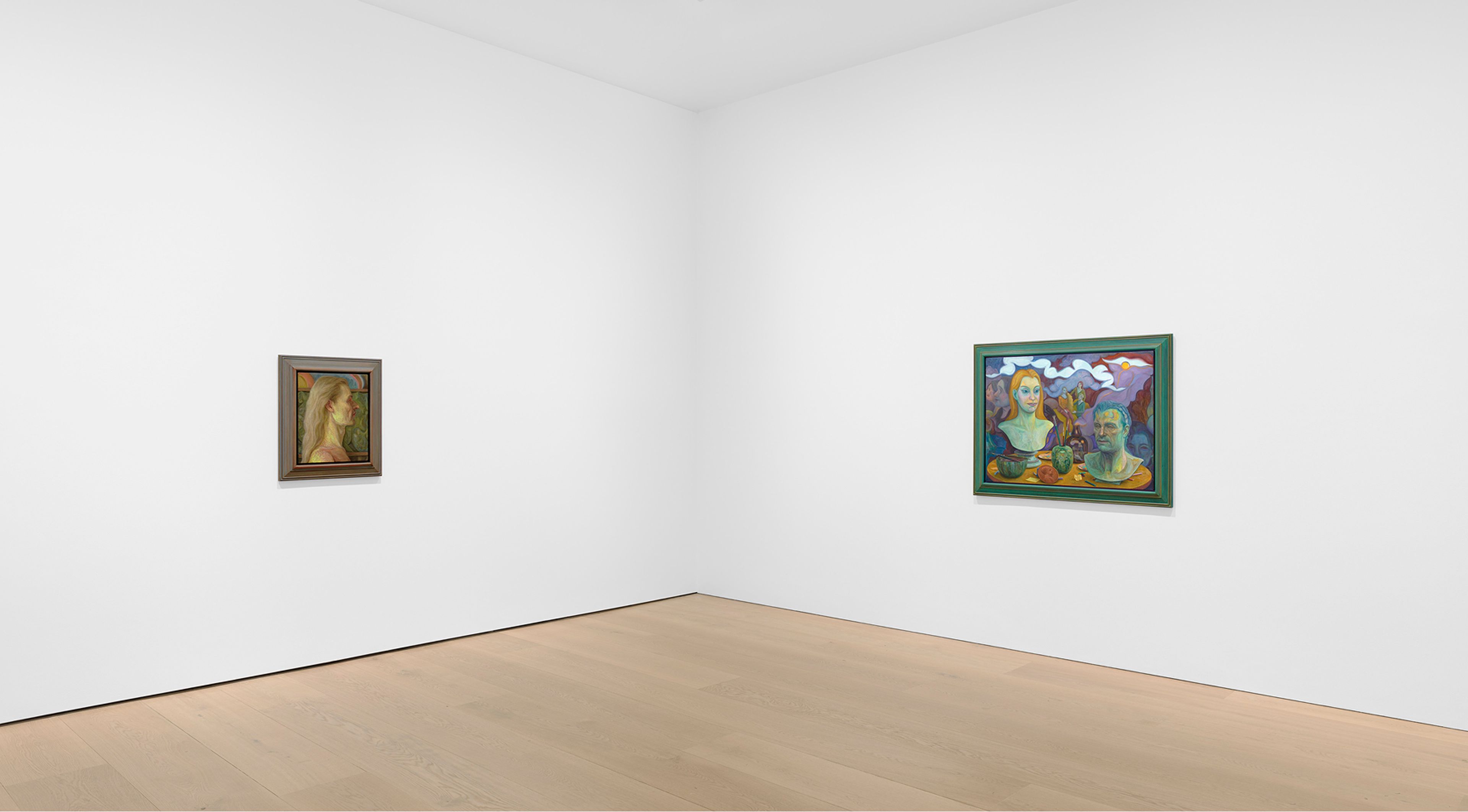
Installation view, Steven Shearer: My Moody Muse, David Zwirner, London, 2026

Installation view, Steven Shearer: My Moody Muse, David Zwirner, London, 2026

Installation view, Steven Shearer: My Moody Muse, David Zwirner, London, 2026


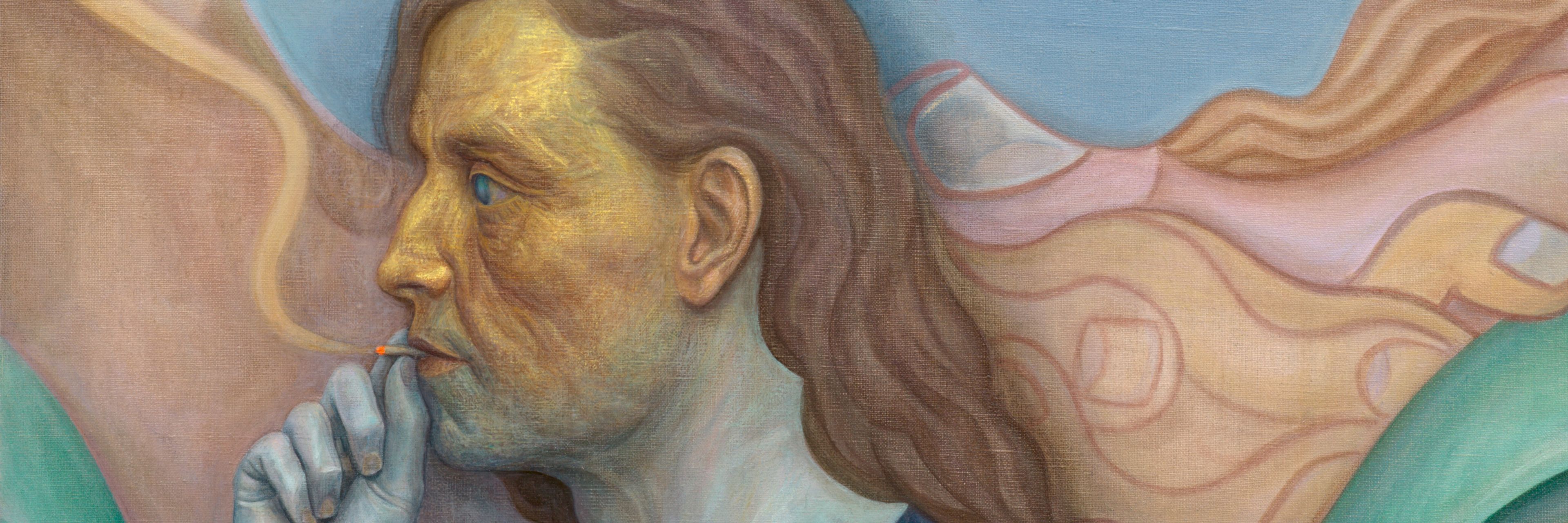
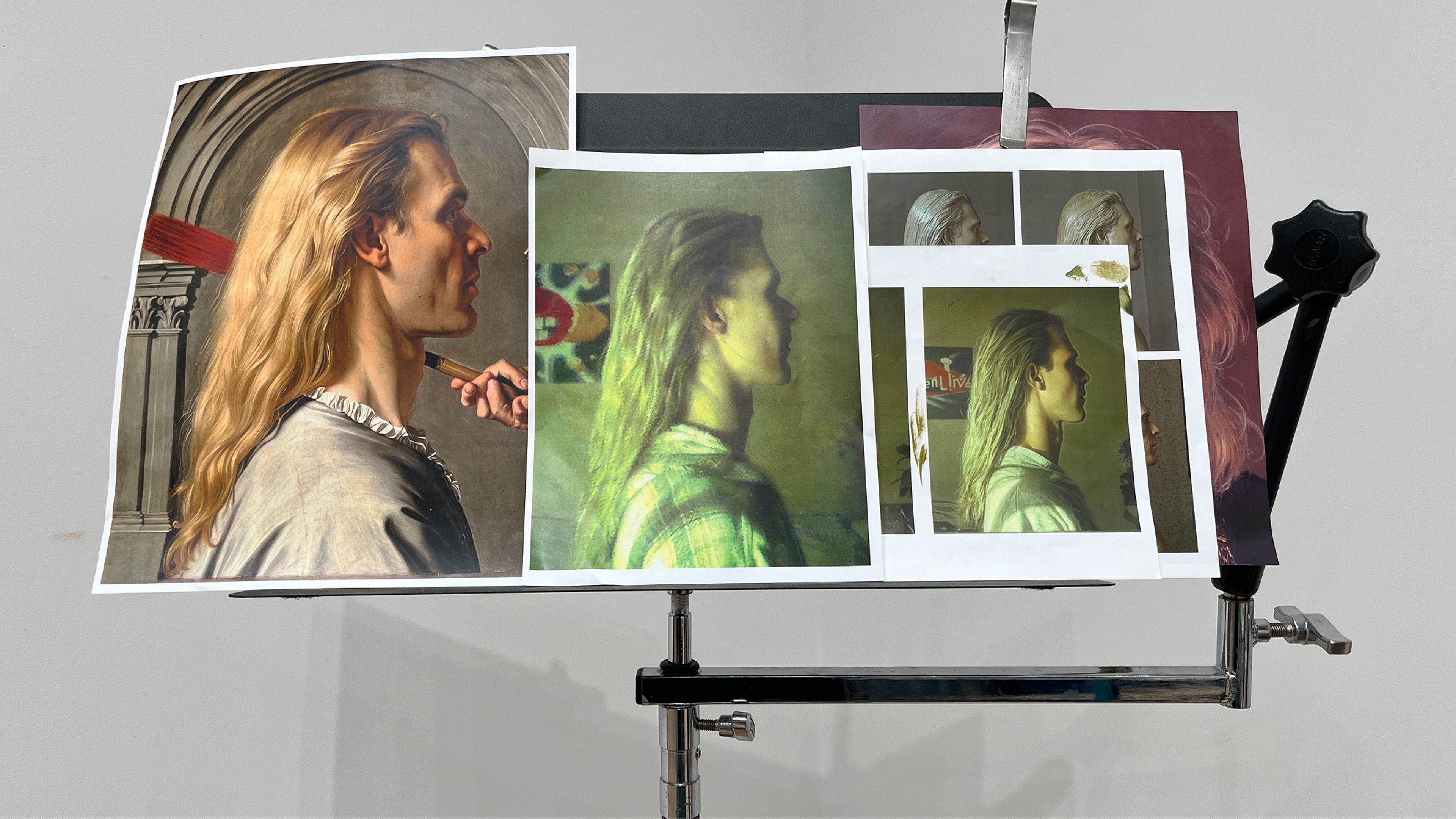
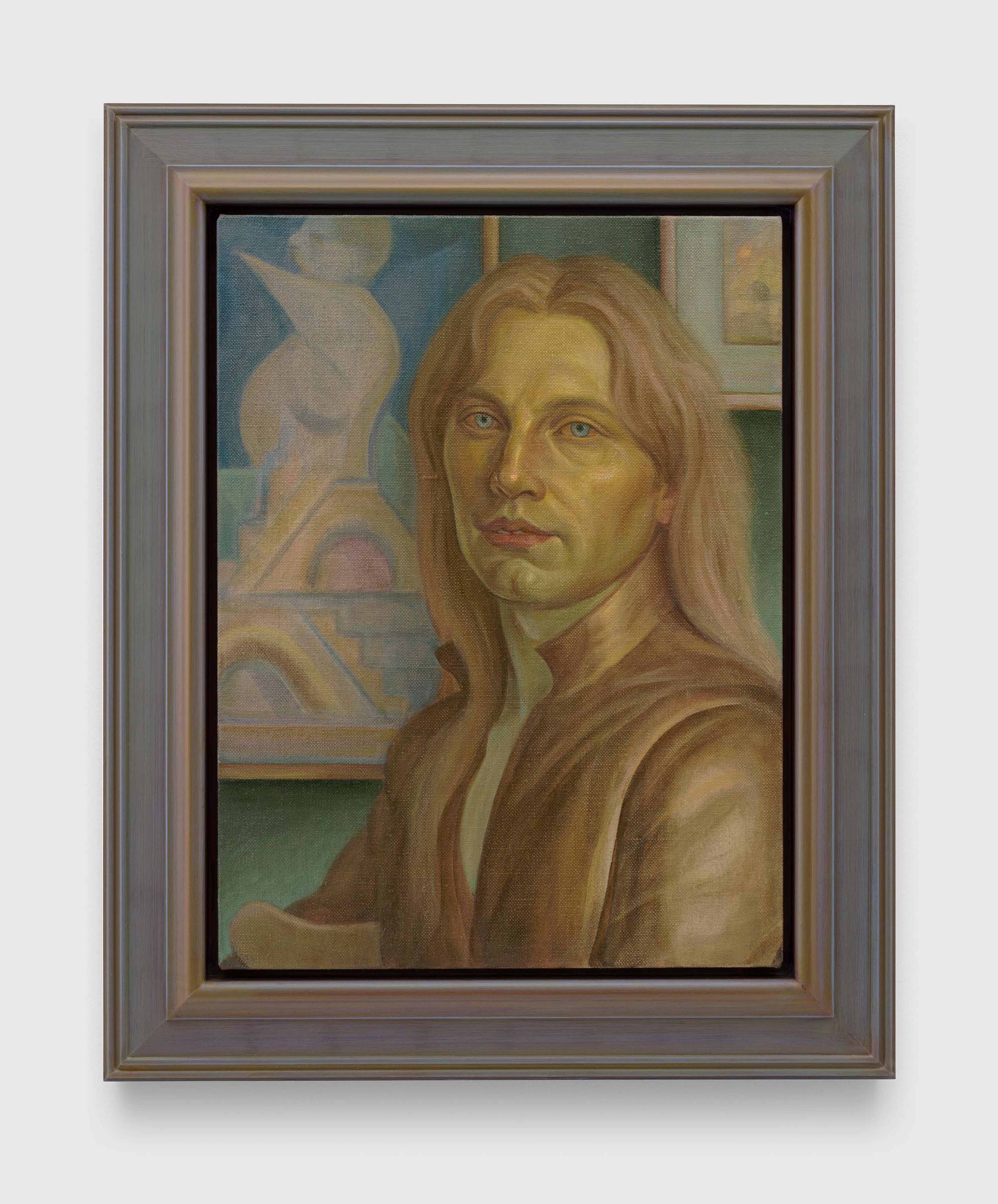
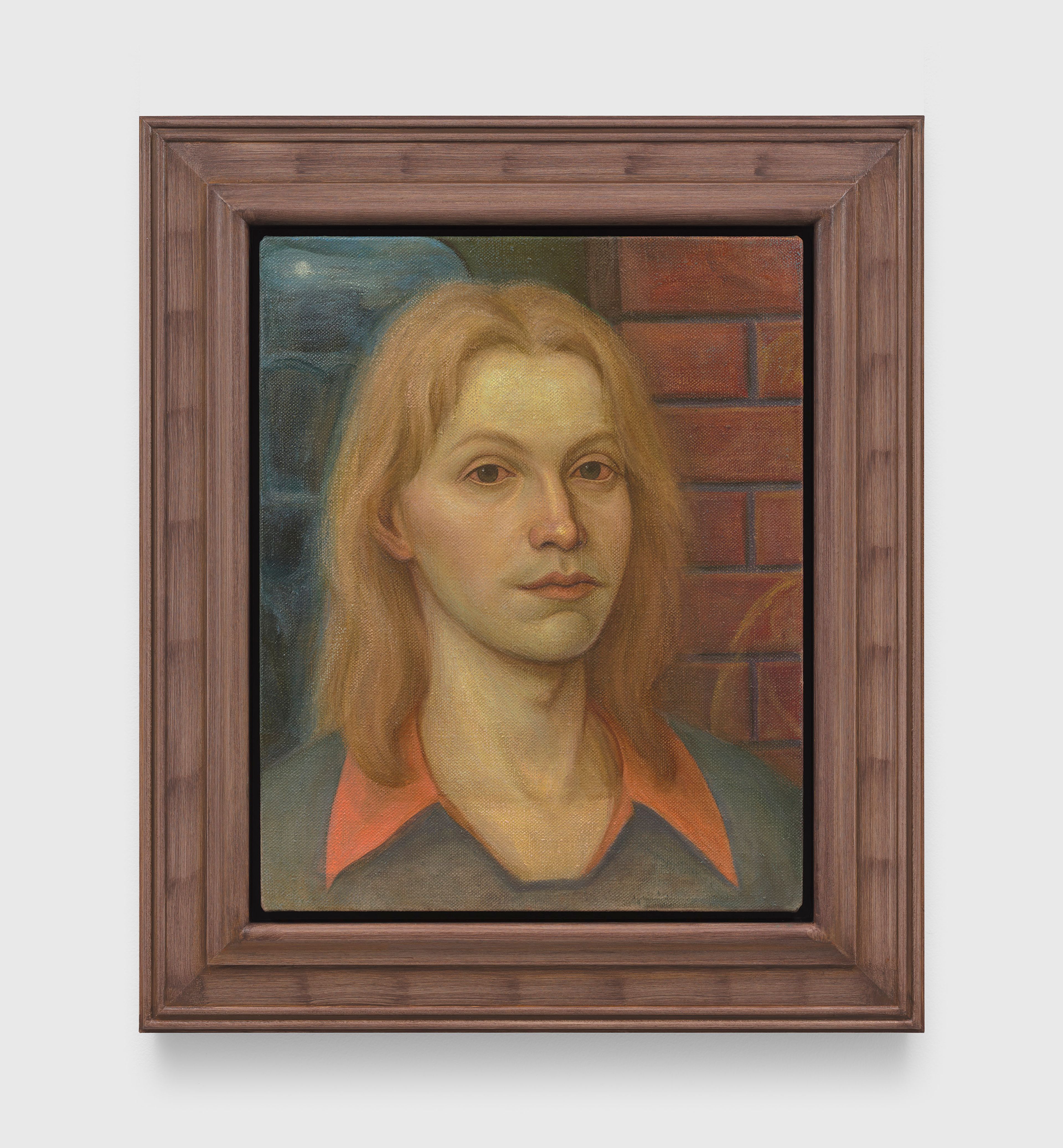
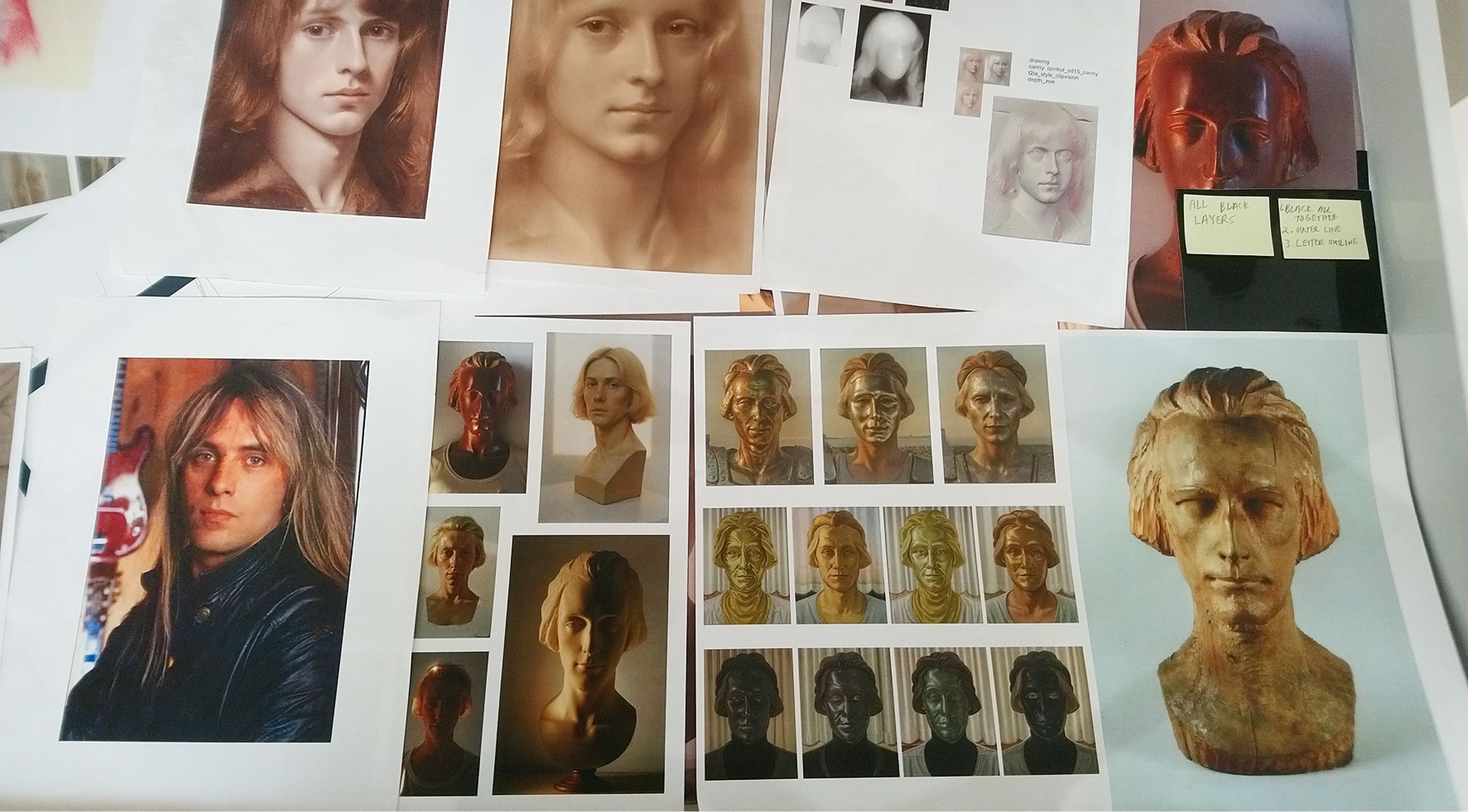
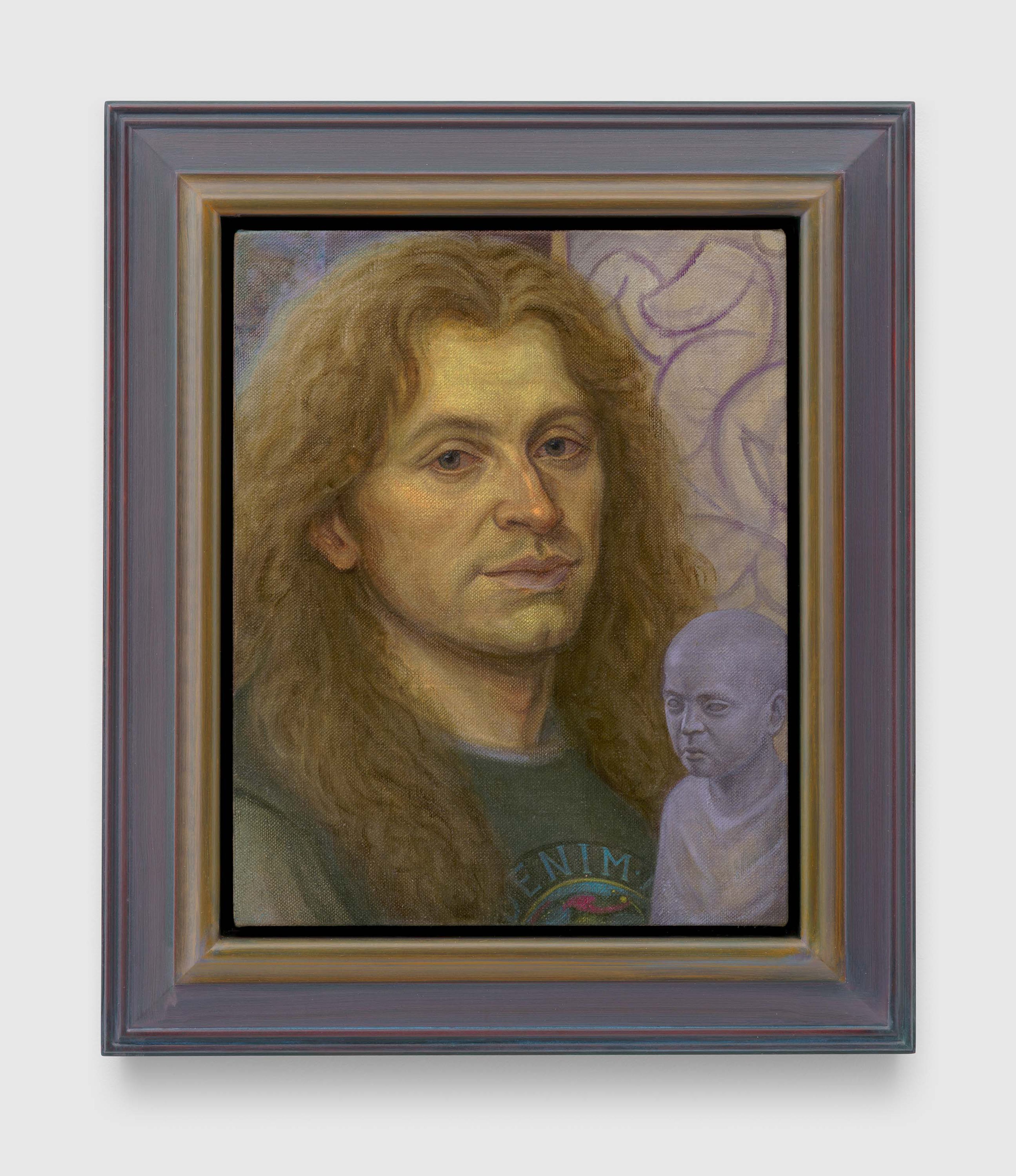
In The Moody Muse, the artist again pays homage to Birdy, a character that appears in previous works and was initially based on a number of photographs from a hair fetish fansite. To create the work, Shearer revisited the original found photographs, his own iterations, and an image generated by the AI model Stable Diffusion, imbuing the resulting composition with the weight that all of these images have accumulated since inception.

Steven Shearer’s studio, 2025. Photo courtesy of the artist
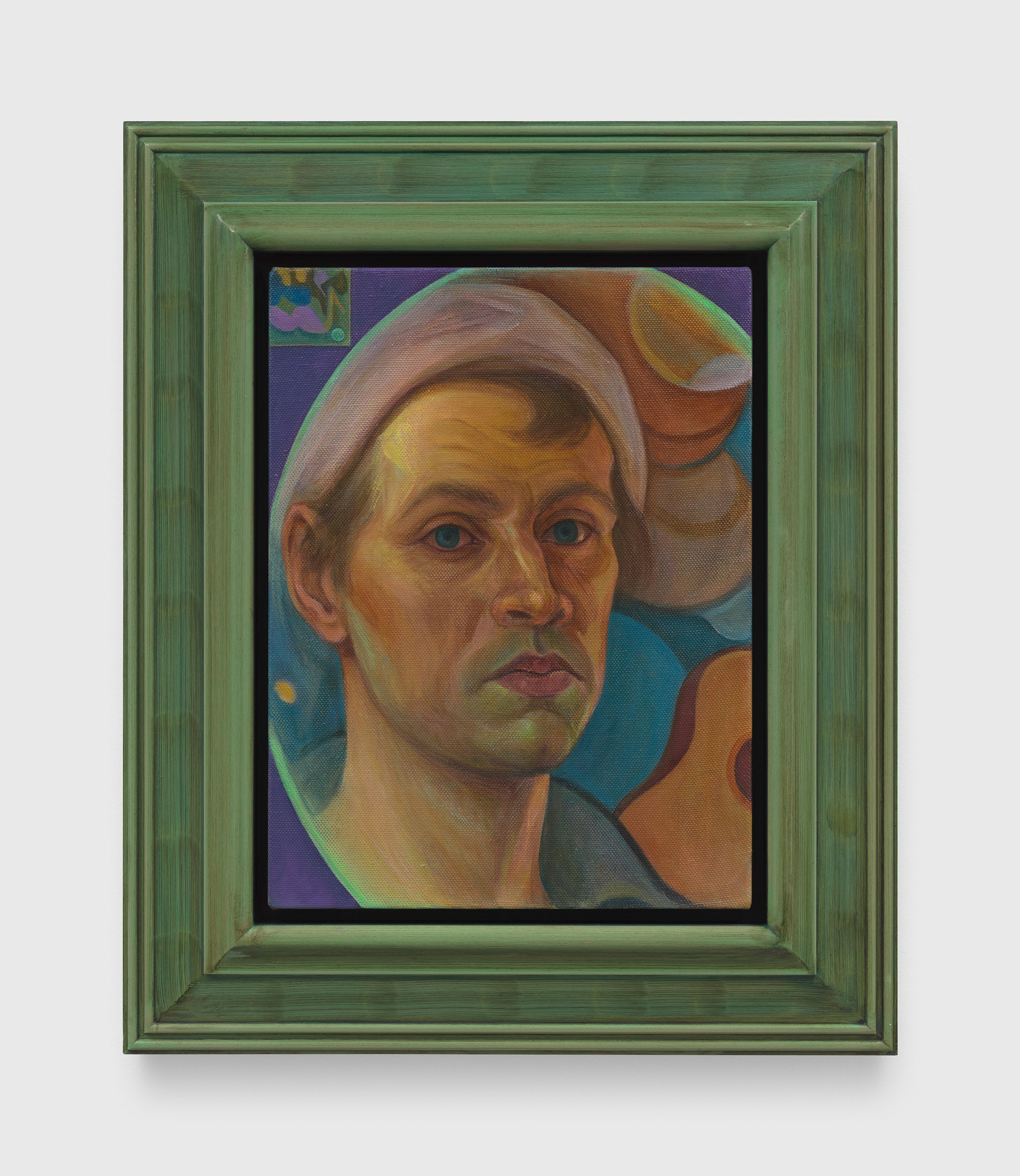
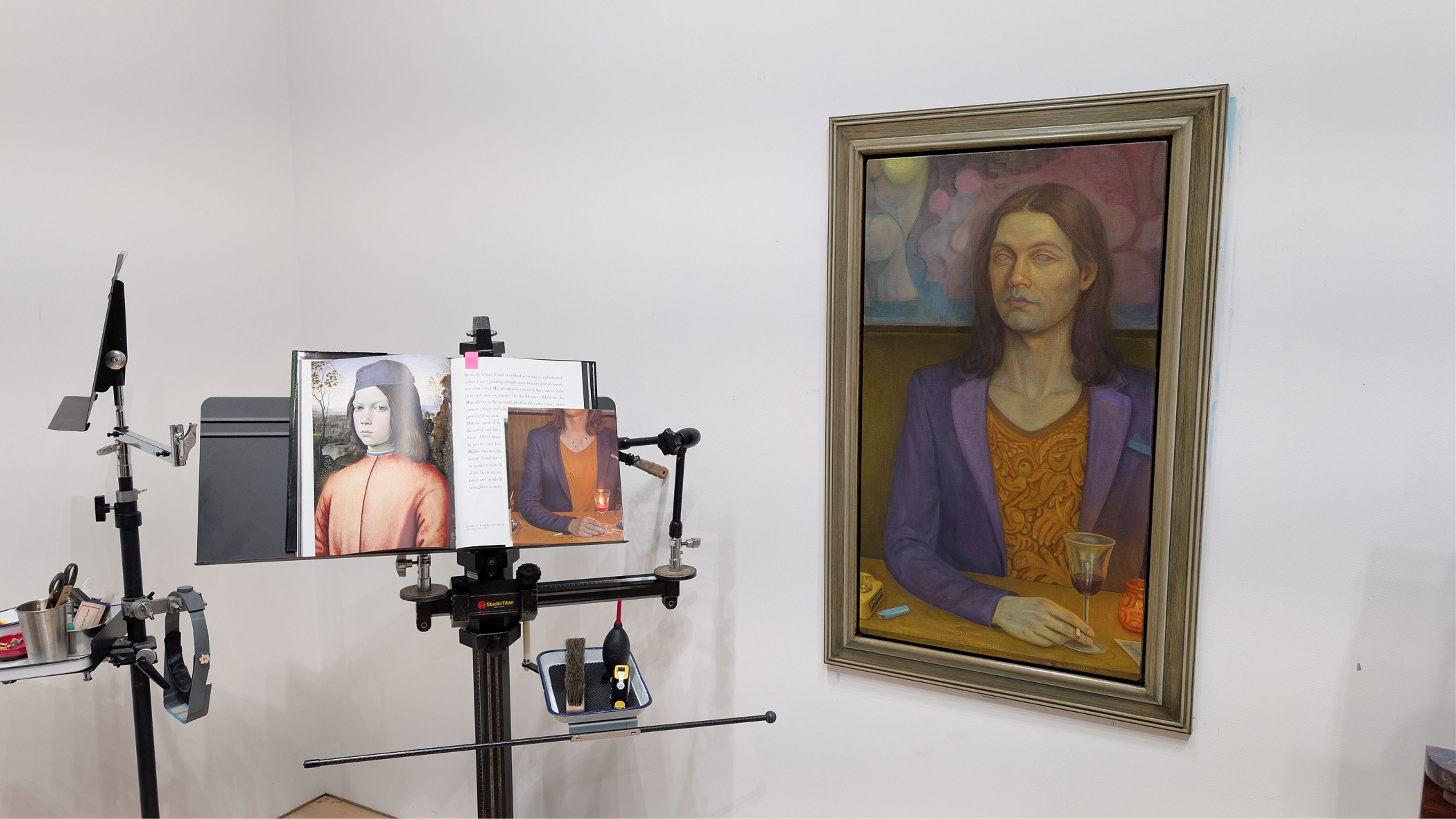
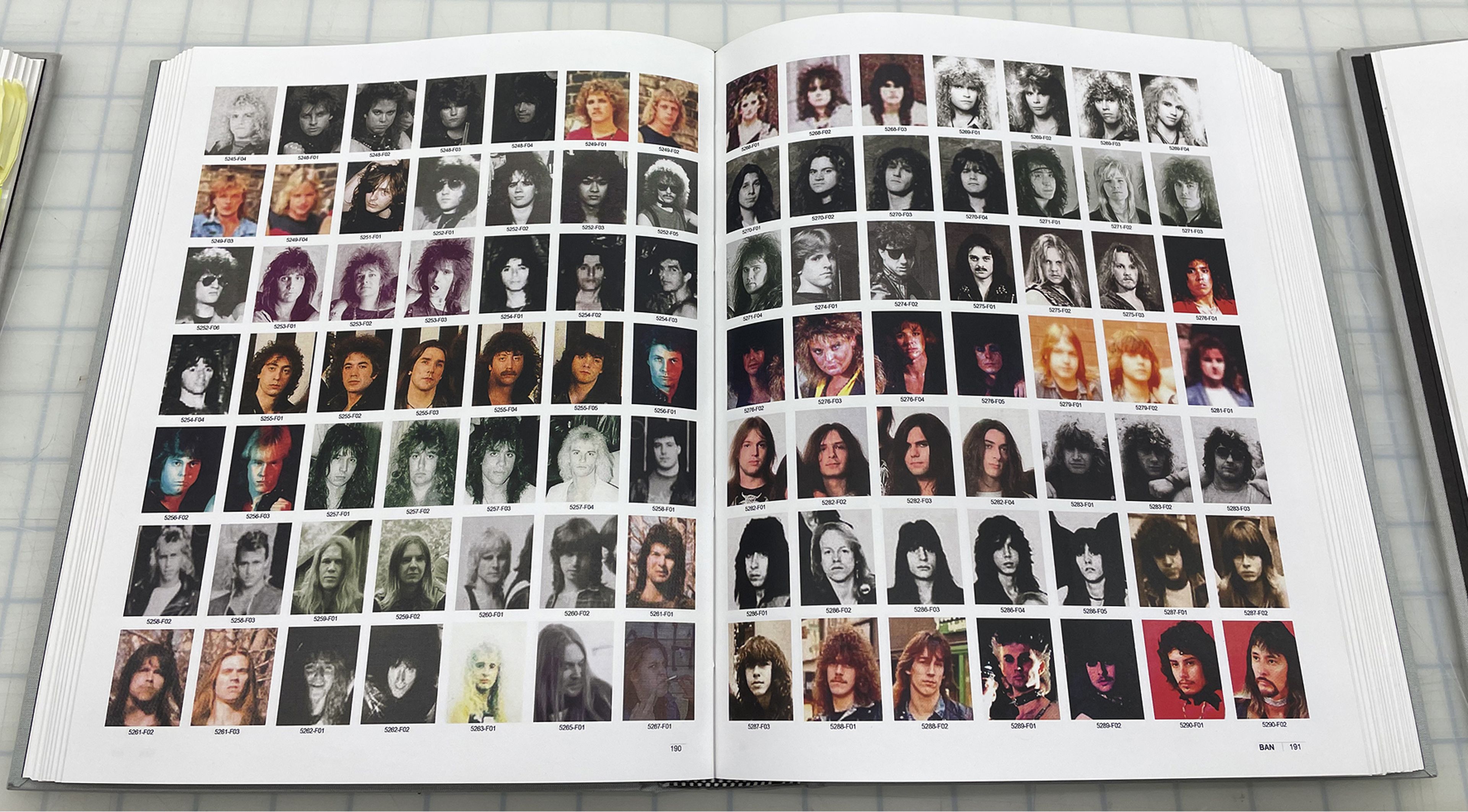
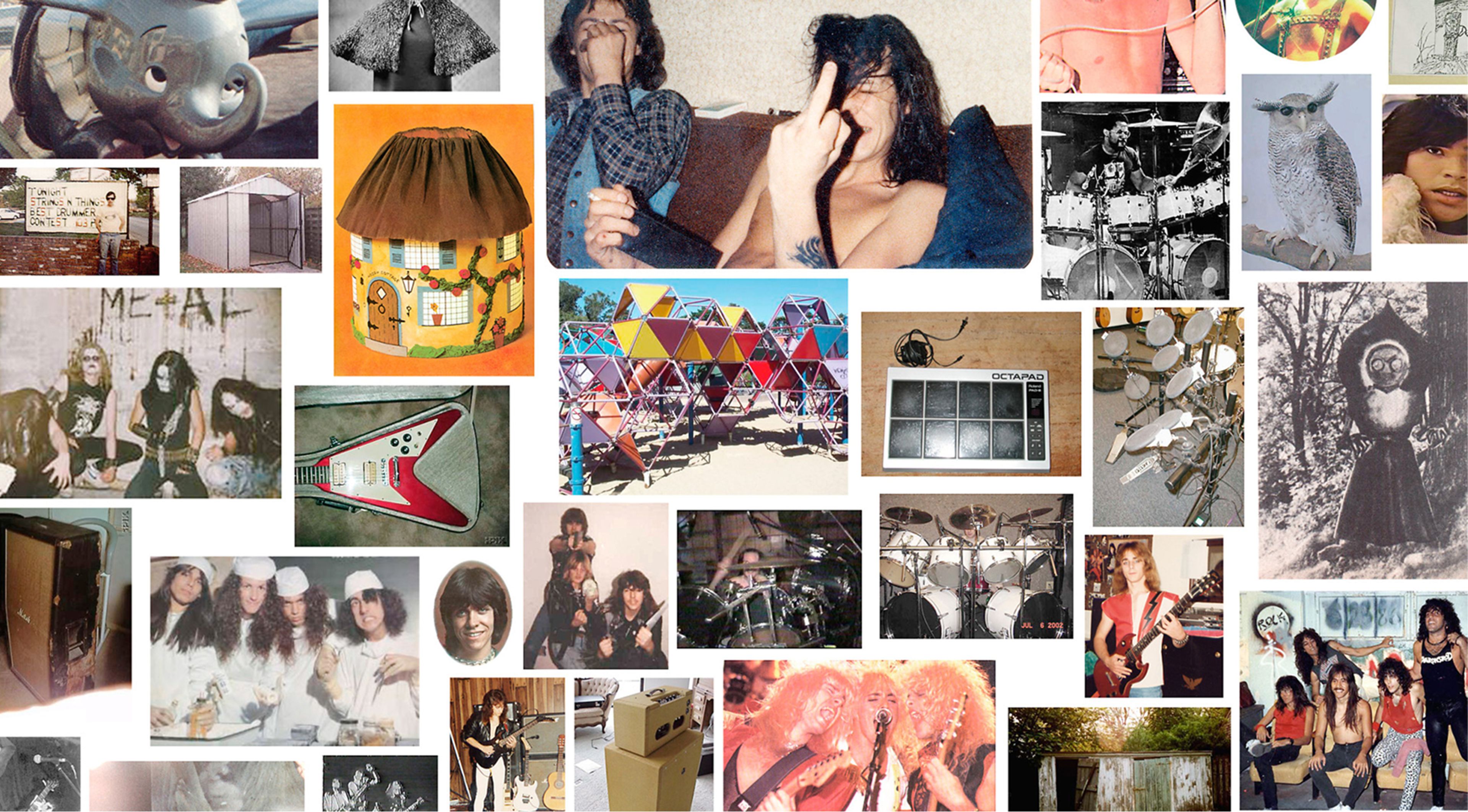
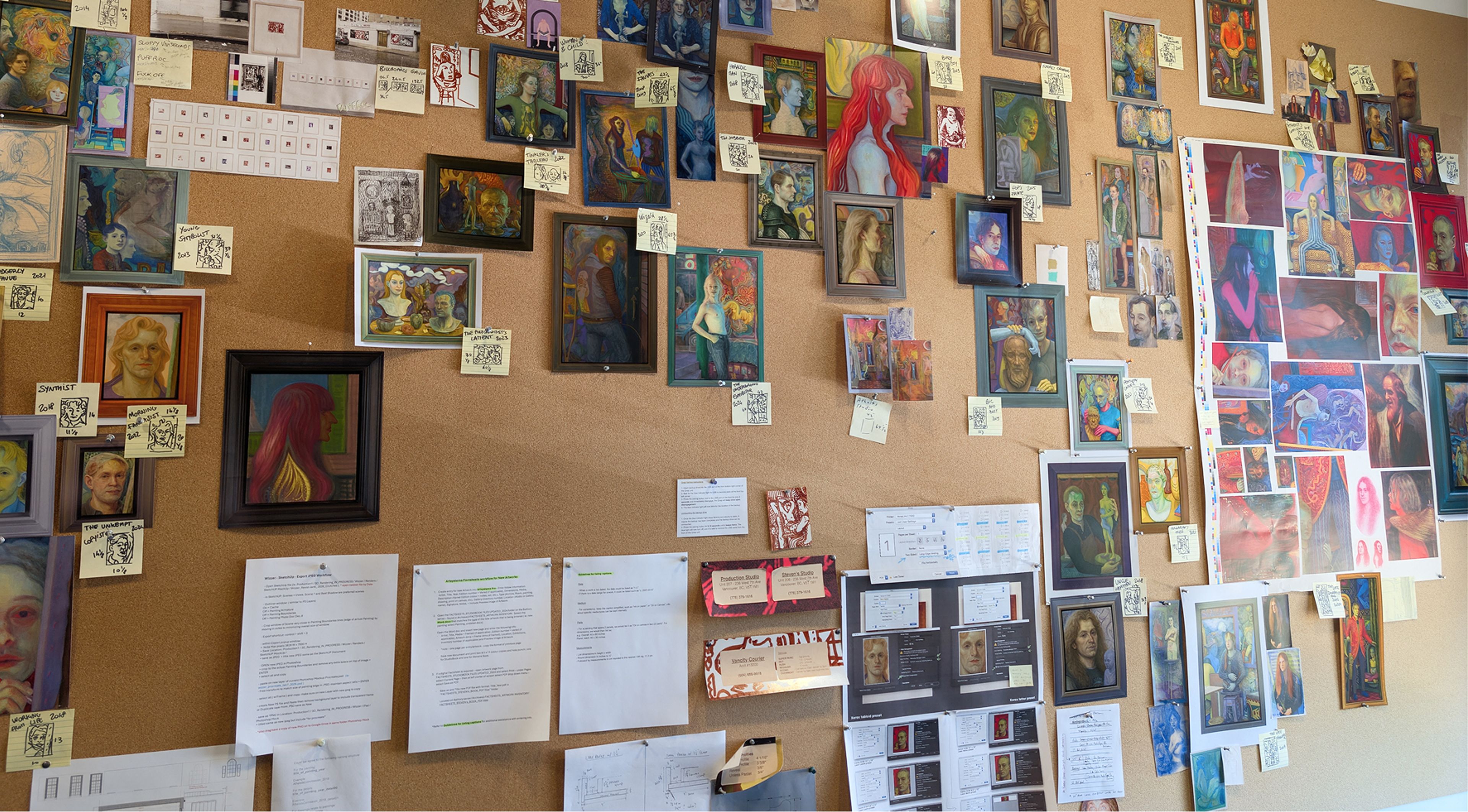
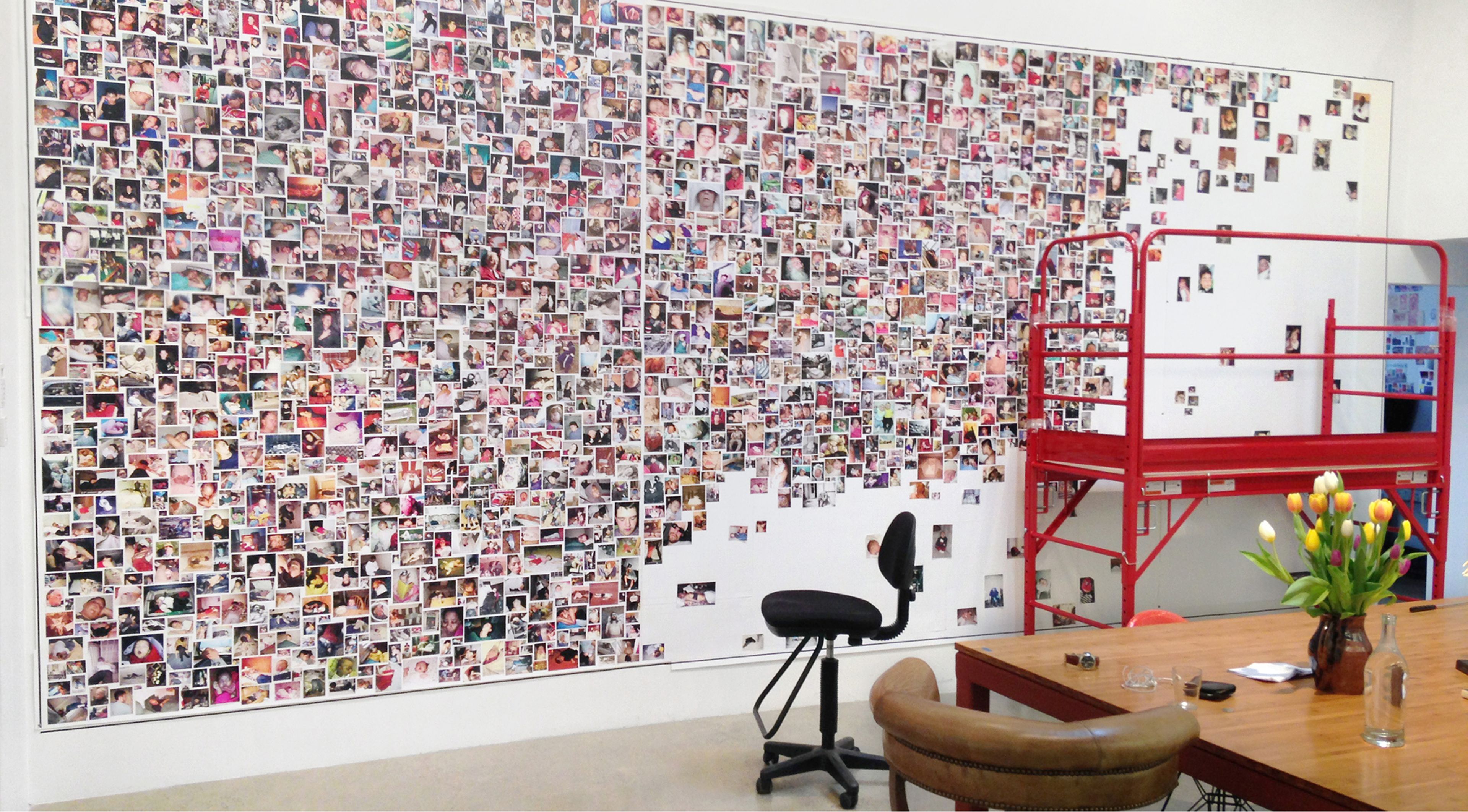
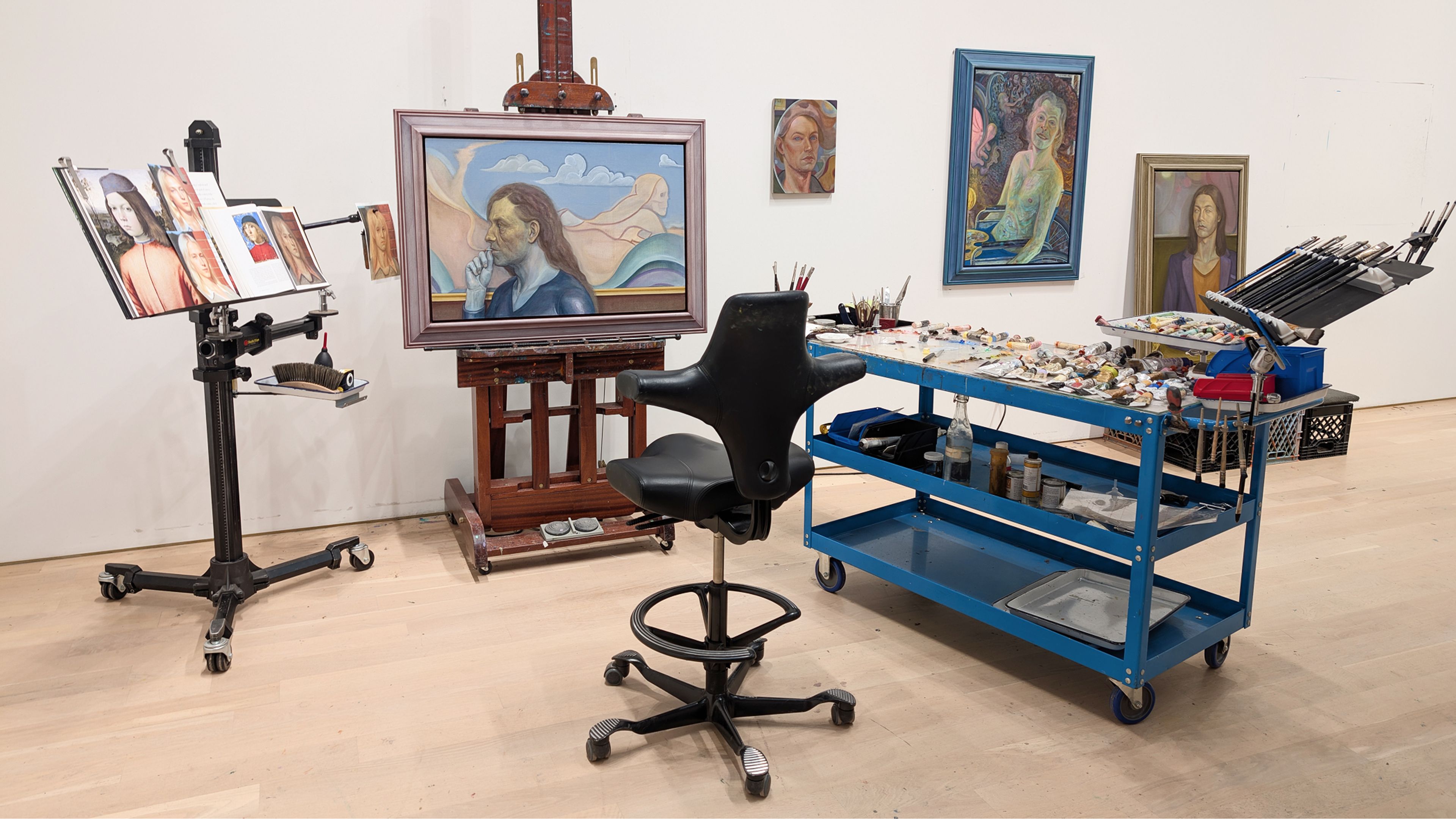
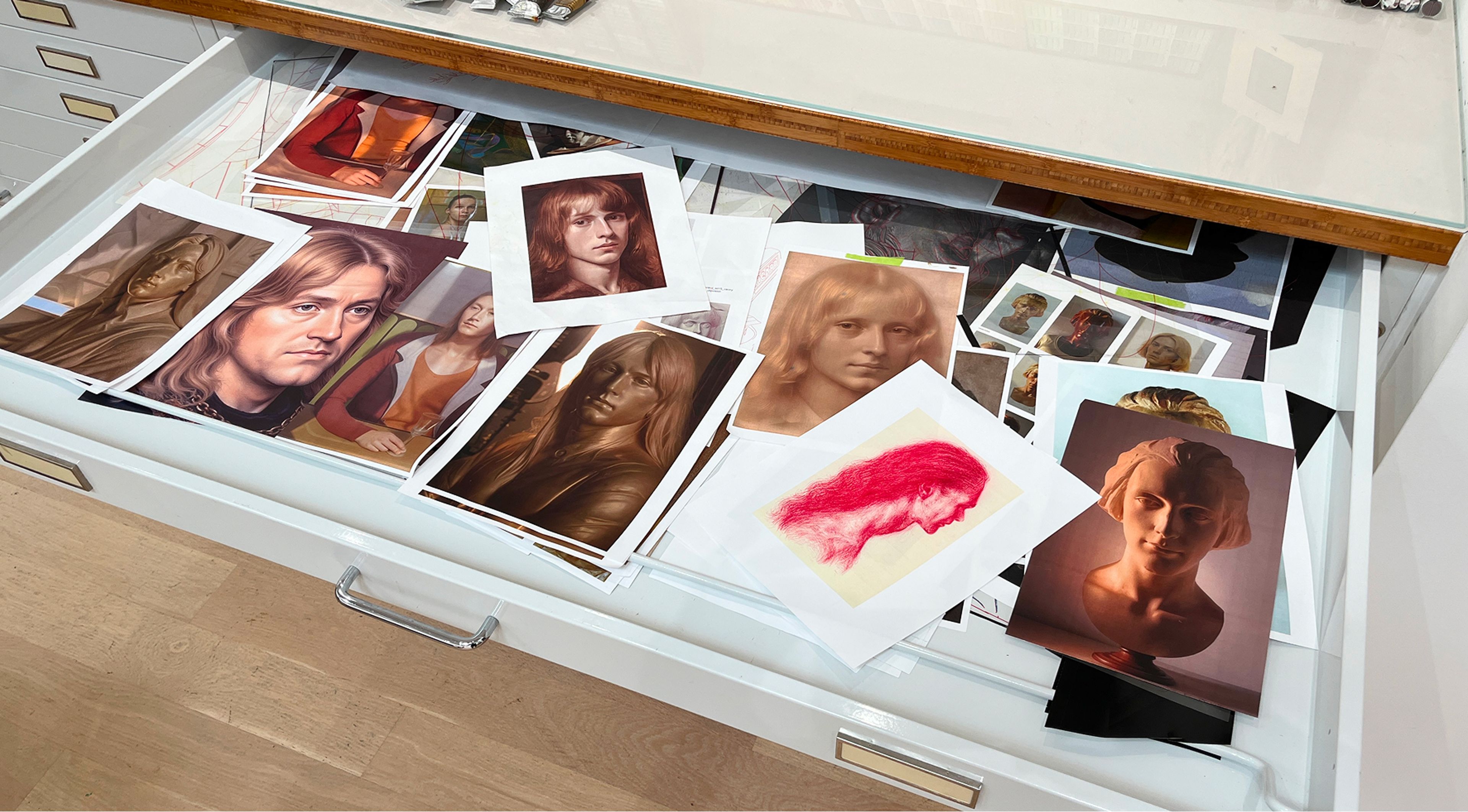
Shearer works fluidly between traditional studio methods and algorithmic tools, including 3D modeling and AI image generation. The resulting compositions are painstakingly hand-painted, holding these accelerated processes in tension with the slow discipline of the medium. In this expanded field, not only his own vast image archive but also the deep reservoir of art historical figuration becomes material, serving at once as reference, source, and subject.

Steven Shearer’s studio, 2021. Photo courtesy of the artist

Steven Shearer, Boy’s Life, 2004 (detail)

Steven Shearer’s studio, 2026. Photo courtesy of the artist

Steven Shearer’s studio, 2015. Photo courtesy of the artist


“Everything I see, I save, and everything I save, I have, and everything I have, I use. The pictures get resized or shaped, reconfigured, transferred to different media, elements get changed, rearranged. The archive, or whatever you want to call it, is the beginning of the art, but not the end.”

—Steven Shearer in conversation with author Jim Lewis

“Everything in a work by Shearer signifies—image, process, materials and style—and he chooses these elements precisely, in seeking the embodiment of an idea.... [He] retains their … light flares, fugitive color, and the back-lit luminosity of the computer screen. It is this luminosity that underlies the glowing light in his paintings.”

—Nancy Tousley, critic, writer, and curator

Steven Shearer, The Underground Exhibitor, 2024 (detail)

Across Shearer’s exhibition, echoes of Old Master painting, Symbolism, Romanticism, underground music culture, and digital image circulation coalesce into figures that feel simultaneously classical and contemporary, familiar and estranged. These synthesized portraits deepen the uncanny quality that has always animated Shearer’s work: images that appear discovered rather than invented, as though emerging from a collective subconscious.

As Shearer describes, the work is increasingly self-generating, guided less by external sourcing than by associations that arise in the process of painting itself. In these “portraits without sitters,” figures materialize from this layered archive, oscillating between the familiar and the imagined while echoing both art historical precedents and his own past work.

“Mr. Shearer’s project is, in part, a poignant autobiographical search for lost time.... In other words, he is doing a kind of cultural anthropology. What larger sociological conclusions to draw from all the raw data he’s gathered, however, is left to the viewer to imagine.”

—Ken Johnson, critic, The New York Times

Steven Shearer’s studio, 2025. Photo courtesy of the artist
Black background, no image

Inquire about works by Steven Shearer